
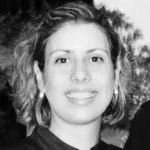
Hi, my name is Ana. Welcome to my blog!
I am Brazilian and live in Belo Horizonte, Minas Gerais state.
I’m an associate professor at UFMG (Federal University of Minas Gerais). UFMG is a public, free-of-charge institution, ranked among the top universities in Brazil and among the best in Latin America.
I have a degree in Architecture and Urban Planning (UFMG, 2001), a Specialisation in Technology and Construction Productivity (UFMG, 2002), a Specialisation in High Abilities/Giftedness (in progress), and a PhD in Art and Image Technology (Fine Arts School, UFMG, 2012).
I began my teaching career in 2004. As a temporary professor, I was part of the Department of Critical and Historical Analysis of Architecture and Urban Planning at UFMG.
In 2006, I tenured at 27 years old with only a master’s degree. For over a decade, I taught at the Technology Department of the School of Architecture, Urban Planning, and Design at UFMG. I also taught at the School of Engineering at the same university. There, I was an honoured professor at two engineering graduation ceremonies.
During that time, I did pioneering research on high-technology management processes, including Building Information Modelling (BIM), virtual reality, and laser scanning applied to cultural heritage complexes.
In 2017, I decided to transfer to the School of Information Science at UFMG, where the Museums Studies course is held. There, I develop projects and research in museum management, collection management, cultural heritage management, inclusive management, digital accessibility, Information and Communication Technologies (ICT), artificial intelligence, digital humanities, neurodiversity in museums and the arts, and high abilities/giftedness. My research featured on the biggest press vehicles in Brazil.
I served as director and vice-director of the School of Architecture Museum at UFMG (MARQ) and as its representative in the UFMG Museum Network. I’m the founder and coordinator of the Webmuseu Portal and LavMUSEU virtual lab at UFMG.
I participated in feedback activities for the development of the Toolkit for Managing Digital Collections (released in 2023), a Spectrum-related resource, Collections Trust. UFMG was the only institution represented from Latin America at the workshops. Spectrum is the UK standard, considered the leading international reference for collection management and adopted by museums worldwide.
I am a former member of the Advisory and Evaluation Committee for Humanities, Social Sciences and Education Projects of FAPEMIG, responsible for granting the areas of museums and arts (2025). FAPEMIG is one of the most important research funding agencies in Brazil.
My book, Management of Museum and Exhibition Projects, sold out its first edition and has been reprinted since then. It received funding from the FAPEMIG, a peer-reviewed publishing grant. It is adopted as a reference by civil service job exams (tenured positions), museum strategic plans, and both undergraduate and postgraduate courses.
I also co-authored six other books with influential publishers, including ANTAC (the most relevant construction technology association in Brazil).
A highlight for the chapter on the award-winning project Pedras Sabidas (Wise Stones), published by the Smithsonian Institution, the world’s largest museum, education, and research complex. It was an international selection of best practices in inclusive digital interactivity, resulting in a book edited by Access Smithsonian.
I’ve been married for 20 years to my beloved husband, Alberto Nogueira Veiga, a specialist in cardiology and family medicine. I share with him the joy and the challenges of raising two children: a girl born in 2017 and a boy born in 2014. The blog on this platform is a legacy of ideas for them.
I believe in a secular and democratic State focused on social wealth, basic universal income, quota policies, public and free-of-charge education and healthcare, equality between men and women, legal guarantee for personal choices regarding reproductive rights, legal and social inclusion of minority groups, and tolerance of differences.
I am a progressive evangelical who considers faith and science to be fully compatible. I work against misinformation and fundamentalism in the Brazilian Christian context. As the apostle Paul announced, faith, hope, and love abide, these three; but the greatest of these is love.