
My childhood home library had two rooms. The first housed several bookshelves crammed with books, a sofa, a large table for four, a chalkboard for studying, and a bathroom.
The second room was my father’s office, but we could all use it freely. Dark wood bookshelves and cabinets, also full of books, a large brown leather armchair for reading, a table flanked by photographs of philosophers, and a collection of vinyl records.
(Let’s provide some context for those who stumbled upon this blog… this writer here was born in the late 1970s!)
The selection in my childhood library was magnificent. Many books on philosophy, literature, theology, encyclopedias, art, and the great classics that should never be missing from a proper library were there.
Today, I have an infinitely better and larger portable library, just a click away, on my e-reader. I bought a lovely little bag to keep it in my backpack, which says: “Books Books Books – So many books, not enough time”.
Digital Books or Paper Books?
Although I prefer reading books on an e-reader for its numerous conveniences, I must acknowledge that my parents and our traditional library from the last millennium contributed significantly to my immense love of books.
First, because my parents were always reading, and they say that children don’t listen to adults’ advice because they are too busy watching what they do. I couldn’t agree more.
Second, because I ended up creating “traditions” in which I read the same books at roughly the same age or stage in life as they did. Now we pass the “tradition” on to our children, who are already book lovers and voracious readers.
Third reason, because that library – the largest and most pleasant space in the house, in my opinion – was a true testament to the authentic role of books in our lives. And I’ll explain what I mean by that in more detail.
Library as a Status Symbol or a Secret Reading Retreat?
Contrary to what my description might suggest, the library of my childhood was a simple place with austere furniture. A private, family-friendly environment. And it wasn’t even inside the house where we lived, but in a two-story shed at the back of the yard, above our playroom and the utility area.
Behind the jaboticaba tree – a tropical, delicious fruit (photo below) – hid a narrow, musty entrance to a timid little red-treaded staircase. And at the bottom of this staircase lay the secret corner of the books.
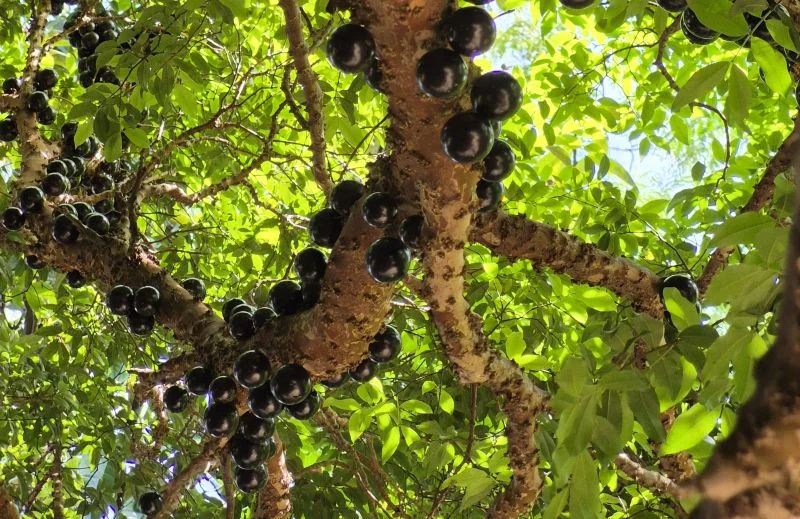
Despite the excellent number of volumes – thousands indeed – the library didn’t exist to be flaunted as a status symbol or sophisticated decoration. It was an everyday library, simply to be… read!
A place where we, children of the house, discover the world in the pages of books and play freely, without frivolous rules or fear of breaking or damaging anything. Except for vinyl records, of course, which we had to be very careful with.
I loved that library! To me, it was a magical place, with its low ceilings, its charming earth-coloured brick, and its mysterious cabinets. It seemed that if one day I pulled out the right book, some secret door would open.
I spent hours of my childhood there reading, praying, playing, and writing in my numerous diaries with my fountain pen.
Nothing against well-appointed libraries and aesthetically pleasing books. After the digital book, I practically only buy a physical book for myself if it’s not available as an e-book. Or if the book is, in itself, a special object of art.
But the familiarity, informality, and freedom I had in my childhood library certainly contributed to the message of a genuine love for those books being passed on to me.
Liberté, informalité, fraternité
Reflective Readings in My Youth
In college, my interest in reflective readings deepened. The field of Cultural Heritage is very philosophical. I participated in fascinating heritage projects during my undergraduate and graduate studies.
I read many philosophers, sociologists, anthropologists, and theorists in the cultural field when I was an architecture and urban planning student. And later, also during my doctoral studies in art and image technology at the School of Fine Arts.
In fact, the first courses I taught as a leading professor at UFMG, my university, were on history and theory, not management or technology. They were called “Architecture and Brazilian Culture” and “Cultural Travels.” I taught the latter course in Diamantina – a small baroque village in the interior of my state, Minas Gerais, which is a UNESCO World Heritage Site.
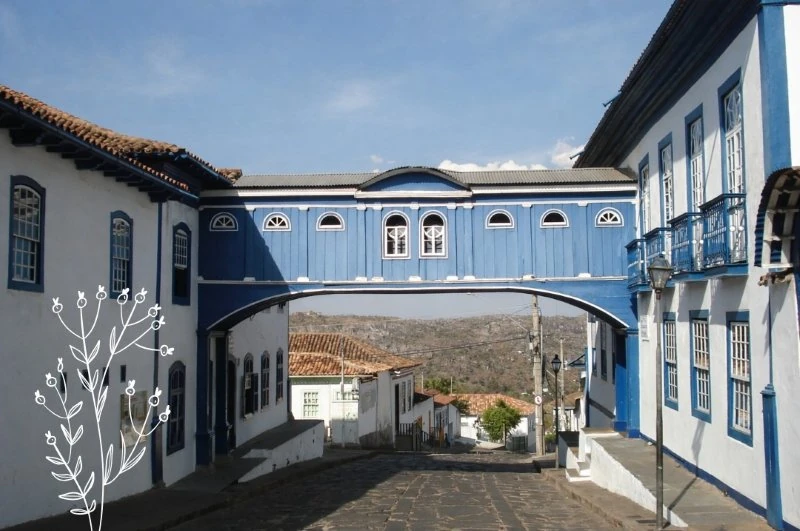
We stayed in the university’s facilities, Casa* da Glória (House of Glory, photo below): myself, the students, and my invited professor, a specialist in local architecture.
I would love to repeat the experience in the future, organising a seminar on productivity and quality of life there during the Winter Festival (July and August), which takes place in Diamantina.
The House of Glory is an incredible 18th-century building with a unique elevated passageway. In past centuries, it hosted some of the notorious ancient travellers who passed through there, such as Saint Hilaire, John Mawe, Ludwig von Eschwege, Spix, and Martius.
I’m reading a book about Spix and Martius right now! An imaginative return to the bookshelves of my youth, when I first discovered the travel diaries of these Bavarian scientists. Of course, in my parents’ library. It was an incredible thrill to stay there at the House of Glory, where they also dwelled!
A Return to My “Philosophical Origins”
I share these memories with you because this year, which is now ending, was indeed a special time to rediscover many of the authors who were excellent companions to me in my youth. Paulo Freire, Domenico de Masi, Bertrand Russell, Pierre Bourdieu, Habermas, and so on. Taking this leap into past readings did me a lot of good.
While these authors expose the cruelties of capitalism and colonialism – reasons why the productivity world is so toxic, by the way – they seek to keep the flame of hope alive. I confess that this breath of hope arrived at a good time; my flame was faltering.
And we arrive at my main point here today with these memories, on the fourth anniversary of this blog in English.
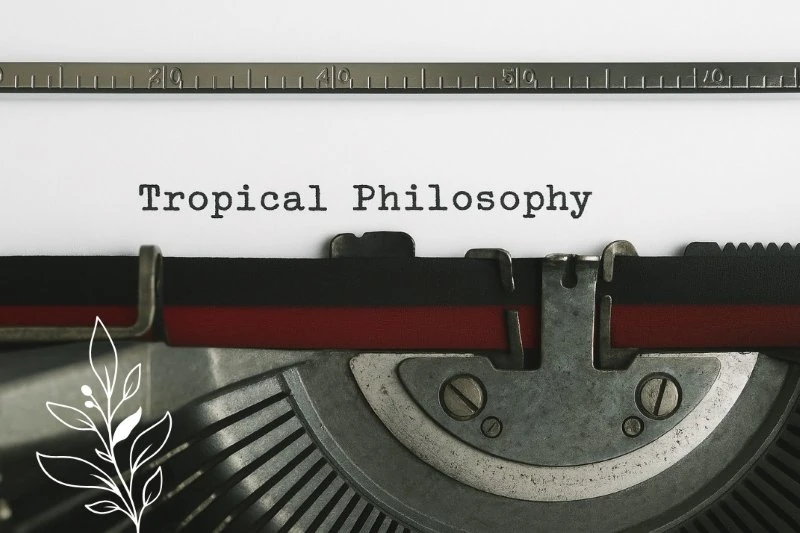
The blog got a new title: Tropical Productivity. I talked more about this in the 3rd anniversary post. And the concept remains alive; I love productivity and will continue to write about this subject, however, with a more philosophical and sociological focus. So, for this last year, the title became Tropical Philosophy.
I want to increasingly return to my philosophical origins and readings, to the (admittedly utopian) values and (admittedly leisurely) priorities of my youth. To the idle, uncommitted times of summer afternoons, when I spent more hours reading about creative leisure and the diaries of ancient travellers than about how to optimise my work or my digital life. After all, there was much less digital to optimise. Lucky young Ana!
Nevertheless, even today, we can choose to turn off our cell phones and open a book. Watch intelligent documentaries instead of YouTube or podcasts. And in bookstores (physical or virtual), visit the sociology, history, and philosophy sections rather than the administration, productivity, and self-help sections.
It’s an excellent resolution for the new year, by the way! Speaking of which…
English Blog Anniversary and Plans for the New Year
This reunion with my “philosophical memories” is yielding good drafts of texts on productivity and quality of life, with a tropical flavour. Unfortunately, for reasons I can’t explain right now, I’ll have to wait a year or two before I publish them for you. But they will come, please wait.
Meanwhile, my Newsletter is finally launched, with early content available only to subscribers. If you like the blog, please subscribe to the Newsletter here!
And this year, I want to launch the Webmuseum, my collection of cultural photographs and their behind-the-scenes stories, a new section of the platform already promised here. Let’s hope I can start it soon.
The blog part has been ready for quite some time, actually. The professional cataloguing of these photos is what’s proving more challenging, as organising this complex collection is part of my university extension project.
Anyway, many topics for this new year. Some new, others nostalgic. May the next four years bring excellent stories about healthy productivity, tropical philosophy, and Brazilian culture. And may you continue to grant me the privilege and joy of your visits, because I love writing this blog for you.
Thank you for your company, dear readers. Happy New Year!

Notes
*The word casa in Portuguese can mean “house” or “home”. We have a word for home (lar), but most people use casa to refer to the place where they live, regardless of the type of building (house, apartment, shed, etc.). A woman named Gloria (Glory) was the wife of the building’s first owner.
Acknowledgements: Thanks to Alberto Nogueira Veiga.
Images: Typewriter (Pexels with AI assistance for the written text), Jabuticaba Tree (Wikipedia), House of Glory (Ana Cecilia Rocha Veiga), Swimming Pool (Pexels and AI assistance for adding a fourth glass of juice).
Please help me improve my English by sending me your suggestions through this contact form. Thanks!