
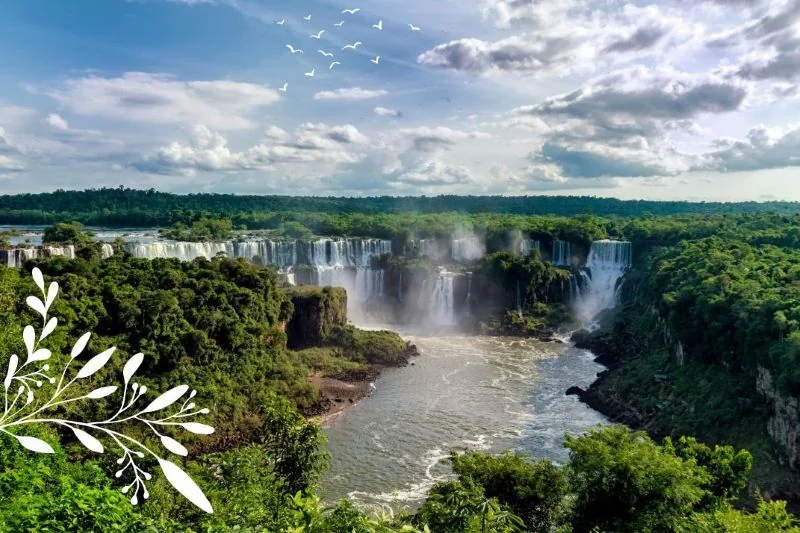
This week, I had the honour of presenting a guest session to students in the Travelling Through Nature course at The University of Warwick (England), conducted by dear Professor Elizabeth Chant.
In this online seminar, I addressed, directly and honestly, the beauties of the Eucalol and Liebig trading cards, as well as the diaries of travellers from past centuries, and the difficult questions they both raise.
Some of the topics covered in this post include: decolonisation, immigration, Brazilian racial miscegenation, the distortion of our intangible heritage in ethnographic tourism and psychedelic tourism (tropical drugs), the elitism of cultural tourism, the addiction to danger behind adventure tourism, the Eurocentric vision and romanticisation of tropical nature and Amazon rainforest in cultural prints, artificial intelligence in the cataloguing and analysis of these prints, among other thought-provoking subjects.
Below is an expanded “blog version” of the seminar, with several references available in the notes at the end. Download the presentation slides to follow along with the visual references in the text. Good voyage, dear readers!
Click here to download the lecture slides.
Introduction of the Lecture
Good morning, everyone! First, I would like to thank you for being here and Professor Elizabeth Chant for this lovely invitation, whom I will take the liberty of calling Liz. I had the pleasure of meeting Professor Liz here at UFMG, my university in Brazil. We were introduced by Professor Bárbara Orfanò, Deputy Director of International Relations at UFMG. And I think Professor Bárbara made a perfect “match”, because as you will see, Liz’s work has everything to do with my new extension project, which I will present to you shortly.
Since I work with inclusive management, it is usual for me to always self-describe for people with disabilities.
My name is Ana. I am a Brazilian cisgender woman with white skin and 1.67m tall. I weigh around 60 kilos, am 46 years old, have huge brown eyes, and have short, curly, light brown hair with blonde highlights. I am wearing a black blouse with palm trees and a necklace with a small map of Brazil. And in the background of the image on your screen is a bookshelf from my home office.
Now I would like to introduce how I structured this lecture. Since I am Brazilian and many of you may not be familiar with Brazil, I would like to briefly share my perspective, as we will be touching on very sensitive topics in this guest session, such as decolonisation, symbolic violence, cultural ethnocentrism, exoticised imaginaries, and exploitative practices in the Americas.
In this sense, I think that knowing a little more about the speaker’s point of view always helps better to understand the message and the content of the lecture. So, I want to talk a little bit about Brazil and my context.
In the second part of the lecture, I will introduce the project I coordinate, in which we are studying trading cards, especially the Brazilian Eucalol cultural prints and the European Liebig trading cards, which inspired the Eucalol cards here in Brazil.
Finally, in the third and most important part of the lecture, I want to reflect with you on the analysis possibilities that trading cards offer, considering points relevant to this course, such as the formation of a travel culture that leads to mass tourism. And how the nature of South America was immortalised, fetishised and commodified through trading cards and travel writing, especially the travellers’ diaries of the 18th and 19th centuries. These diaries and iconographic records correlate with the trading cards, as we will see.
Well, we have an interesting agenda for this morning. I’m pretty excited —I hope you enjoy it and have fun! Let’s go, starting with My Place of Speech, as we say here in Brazil.
My Place of Speaking
Where are these baroque houses located? Could it be a Portuguese village? We are seeing images of historical cities in the state of Minas Gerais, my state, where the capital Belo Horizonte, my city, and UFMG, my university, are located. Which makes perfect sense, after all, Brazil was mainly colonised by the Portuguese. I say mainly, because in some specific locations we had short periods of French and also Dutch colonisation. Speaking of which…
Where is this synagogue located? Is it in Israel? Actually, it’s in the city of Recife, which is well known for its paradisiacal beaches. The Dutch colonised the area for a short period in the 17th century. And it was a period of relative religious freedom in the region. And this museum and this synagogue are located where the first synagogue in the Americas was built, at the beginning of the 17th century.
Where is this centuries-old Moorish castle located? In Morocco? Egypt? Spain? Actually, it’s in Rio de Janeiro. It’s a very important Brazilian research centre called Fiocruz.
Brazil has a large community of Arab descendants, especially Syrian-Lebanese. In fact, the Brazilian-Lebanese community is larger than Lebanon’s current population.
Where is this German Fachwerk architecture located? This is the city of Gramado, in Southern Brazil, with a strong German influence. About five million Brazilians are of German descent.

And where is this church located? La Chiesa di Nostra Signora di Achiropita. Could it be in Italy? No, this church is located in the Bixiga, an Italian neighbourhood in São Paulo. About 15% of the Brazilian population — 30 million people — have Italian ancestry.
Finally, these lanterns, as you’ve probably guessed, are not in Japan. They are located in the Liberdade (Liberty) neighbourhood of São Paulo. Brazil has the largest Japanese community outside Japan. The Liberdade neighbourhood has been chosen as one of the 25 best destinations in the world to explore next year by the renowned British travel guide Lonely Planet.
I think you can get an idea of where I’m going with this…
Brazil has welcomed millions of immigrants from around the world. Brazilian geneticists from the USP university published the first results of a major research project on the genetics of Brazilians in the Science journal, which I will briefly present to you.
If we consider the Brazilian maternal lineage recorded in mitochondrial DNA – part of the cells inherited exclusively from the mother – Brazilians carry 42% African and 35% indigenous ancestry. Millions of Africans were trafficked as slaves to Brazil during the centuries when we were a Portuguese colony. Similarly, the indigenous people suffered cultural domination, enslavement, and, for those who resisted, genocide.
However, when we look at the Y chromosome, which is exclusively paternal, the situation is reversed: Brazilians are 71% European. This data is a historical scar in our genetics, revealing not only colonial domination but also the patriarchy of our past.
According to the geneticists of this project, Brazil is probably the most mixed-race population in the world. Brazil is a melting pot! And this is evident not only in our genetics, but also in our culture and in my own family tree.
When I examine my family’s genealogical tree, I see this strong mix. According to family oral history, my great-great-grandmother was of indigenous descent. My blood is a celebration of nations, and that’s awesome.
The person in my family who perhaps best represents this melting pot is my maternal grandmother, Grandma Zelina (her nickname). You are seeing a graphite drawing I made of my grandmother.
My grandmother Zelina had a German grandfather and a Portuguese grandfather. And her brother married into an Italian family. My mother says that in her grandmother’s house — Grandma Zelina’s mother’s house — people spoke German in everyday life. They only used Portuguese to communicate with people on the street. Some cities around here still have a considerable population of German-Brazilian families, who are similar to this, with bilingual public schools and everything else.
My mother even experienced this Tower of Babel, but unfortunately, I didn’t. When I was born, my grandmother Zelina’s German and Italian-speaking relatives had already passed away. So, in my family, we always communicated in Brazilian Portuguese.
Perhaps because of the awareness of colonisation and also this Brazilian cultural mix, it’s easier for me not to be a nationalist. In fact, I must confess that I consider patriotism a provincial form of collective narcissism.
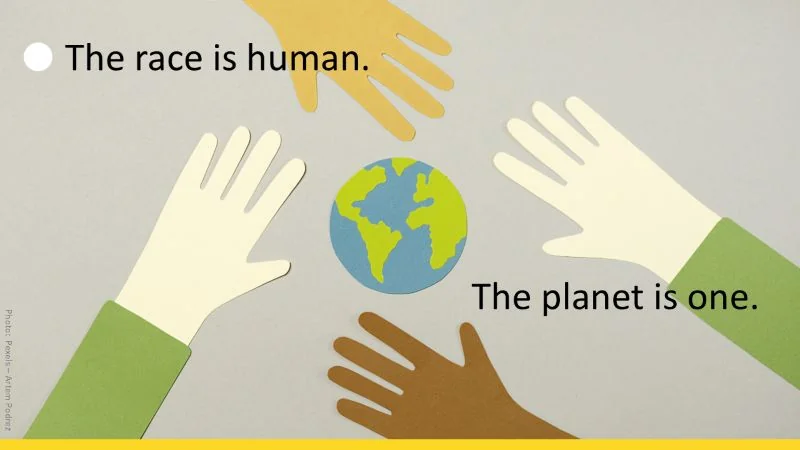
I have always felt like a citizen of the world. The planet is one, the race is human. And there is no Plan B; we need to take care of our planet. Sustainability is not a “fad”; it’s a catastrophic emergency of planetary proportions. The climate crisis is already affecting us here in Brazil and you there in Europe.
But why is all this relevant to this lecture? And what is my grandmother doing here?
I inherited from my grandma Zelina a collection of approximately 800 trading cards. And it was from my paternal grandparents that I inherited the desire to travel the world, because they travelled a lot. They actually sponsored my first international trips to Europe and the United States. Travelling is my favourite hobby. And reading about travel, too.
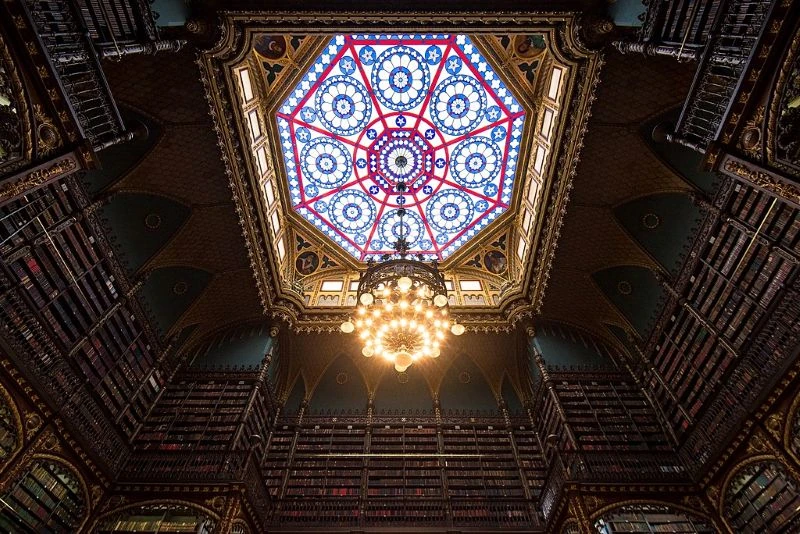
The city I’ve probably been to the most times in my life is Rio de Janeiro. And when I was a teenager, we always visited the Royal Portuguese Reading Cabinet with my parents, a beautiful library in the historic centre of Rio. And around this library, there are many bookstores and second-hand bookshops. I spent hours browsing for travellers’ diaries in these bookstores and devouring these books. To this day, I’m always reading some travel diary alongside other readings.
And you need to understand that I am a digital immigrant; I was born in the pre-Internet era. When I was in college, there was no Google, no social media, and no smartphones! When I was about twenty years old, I travelled alone to Europe, and I used one of those iconic red telephone booths to let my parents know I was in England and that everything was alright.
Of course, these trading cards didn’t have the same impact on my life as they did on my grandmother and on people in the past. In my childhood and youth, there was already television. Books were accessible to buy and to read in libraries. So, the trading cards weren’t my primary source of travel information. But they did have a significant impact on my imagination of so-called “exotic” places.
Incidentally, a slight aside, I don’t mind people calling Brazil exotic or calling me “exotic”, even though the politically correct term is Non-Western. Apparently, I am a non-Western person. The thought that someone doesn’t consider me “Western” doesn’t bother me at all, but it sounds pretty funny! Brazil isn’t just one country. It looks more like a continent. And this melting pot has a bit of everything —a myriad of flavours with a vernacular spice. But much of that mix is made up of what we understand as Western Culture. And the fact that I travel a lot also contributes to this cosmopolitan view, along with my many ancestries.
Therefore, this project is triply personal for me. In fact, in more than twenty years of academic career, this is my most personal project because it involves my grandmother’s collection of trading cards, my favourite hobby —travelling—and my favourite leisure reading: travel diaries.
I love museums; I’m a professor in the Museum Studies course at UFMG. So, I followed my passion. And that has advantages and disadvantages. When we work with what we love, we see the other side of our passion, beyond the fun. We see the problems and the dark side.
And that’s what will happen here and will become very clear in this lecture. As we will see, this project will celebrate the artistic, historical, and beautiful side of trading cards, but also inevitably their complicated side.
I had promised myself that I would never turn my passion for travel and travel writing into an academic project. But in life, we sometimes break our promises, right? So, let’s get to the project.
Webmuseum Project
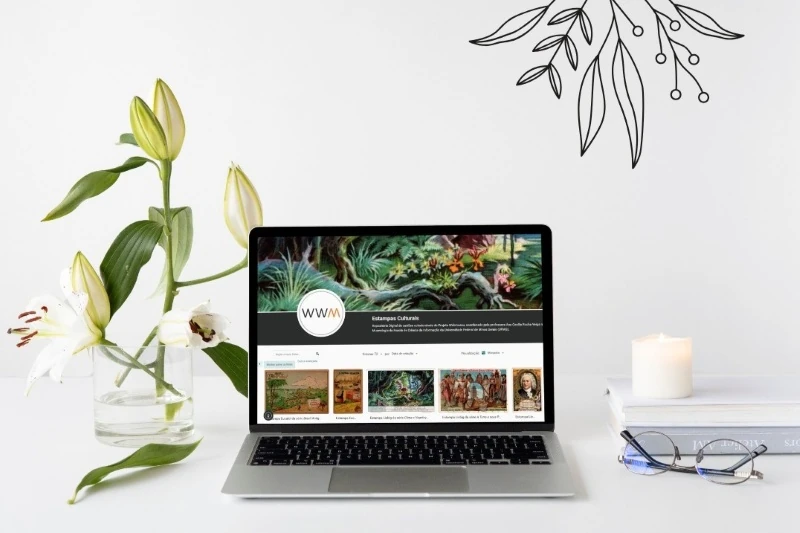
The Webmuseum Project: Inclusive Management of Cultural Heritage is an extension project connected to my research projects and also to my courses in the Museums Studies program at UFMG. It’s a large project with several facets, so I will only focus on the trading card aspect in this presentation.
Our goal is to develop a process for cataloguing, managing, and disseminating museum collections online supported by Artificial Intelligence. And for that, we needed a collection to develop and test this process.
I decided to use my grandmother’s trading card collection for several reasons, but mainly because it’s with me and I wouldn’t need to go to a museum, request authorisation, deal with bureaucracy, use conservation PPE, and so on.
Despite being a private collection, it is museum-worthy. Several important museums worldwide collect these cards, including The British Museum. The British Museum has more than 15,000 trade cards in its online catalogue.
In fact, I would even like to donate this collection to a museum in the future, when we finish the project, but then I’ll have to negotiate with my children. They love these trading cards. I love them too, but I understand that in a museum, more researchers and visitors could have access to these stunning cards.
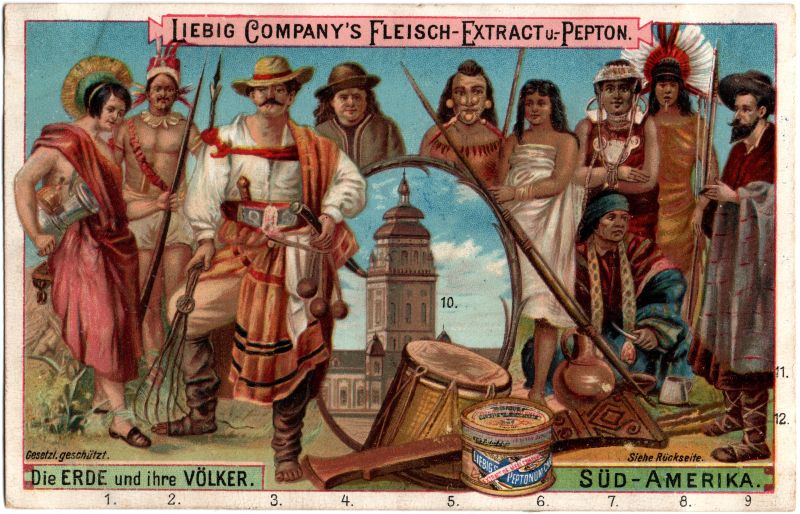
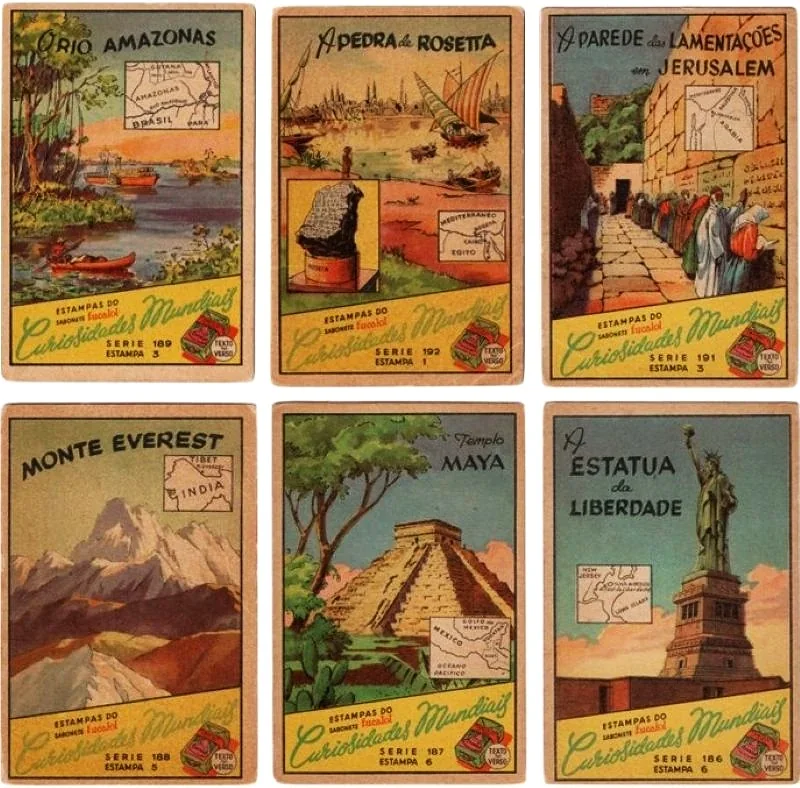
Although there are many trading cards, we will focus mainly on two specific types: Liebig Trade Cards, published primarily in Europe in the 19th and 20th centuries and included as freebies with canned meat produced in South America; and Eucalol Prints, published in Rio de Janeiro between the 1930s and 1960s. They came as a freebie in a box of soap from the Myrta company.
This company was owned by a German Jewish immigrant, which already shows the European influence on the origin of these Brazilian cards. Not only because Liebig cards inspired them, but also because the owners of the company that published them here in Brazil were not Brazilian.

In short, the primary objective of the project is in the areas of museum and collection management, with the aid of Information and Communication Technologies and Artificial Intelligence.
I won’t go into this part of the research here, as I believe you will have little interest in learning about museum collection management protocols, such as the Spectrum UK Standard, which serves as our primary reference in this project.
However, a secondary objective of the research, which is also necessary in this project because we need to fill out the cataloguing forms to test the process, is the production of content and analyses about the objects, in this case, the trading cards. To this end, we intend to invite specialists from various fields to help us understand and analyse these trading cards.
Biologists, historians, sociologists, archaeologists, and specialists in tourism and nature. In short, people of reference in diverse areas, like your beloved professor, Liz. It will be an honour to have Liz helping us to understand these cards.
And what types of analyses do trading cards allow?
Trading cards allow a series of analyses involving: cultural heritage, history, ethnography, museology, conservation of ephemeral works, art, aesthetics, semiotics, concepts of authorship and plagiarism, marketing, communication, information, music, heraldry, fashion, design, typography, tourism, environment, botany, palaeontology, archaeology, medicine, decolonial studies, gender studies, etc. In short, it is material that supports a vast number of studies.
The project is just beginning, so we are only warming up the engines in these analyses, using our own knowledge and conducting exploratory AI studies.
Which of these analyses will we conduct in depth along the way? We don’t know yet; it will depend on what we find — on the avenues that seem most promising as we digitise and catalogue the trading cards.
But to give you an idea of how rich this primary material is for study, let’s look at some examples of possible analyses and fields of investigation. I’ve chosen to talk about four aspects of tourism that we can informally call the four Ds: Distinction, Decolonisation, Drugs, and Danger.
Curious? Well, I hope so! Starting with Distinction: Cultural Tourism.
Cultural Tourism: Distinction
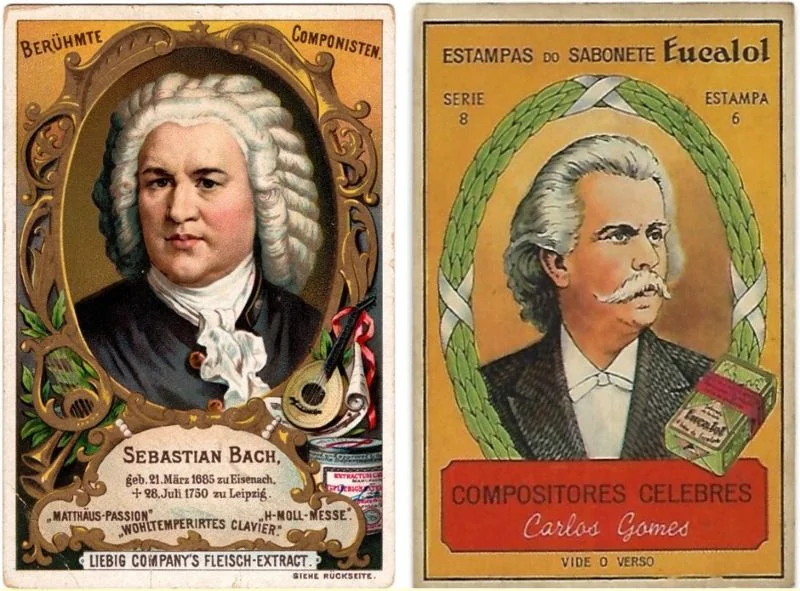
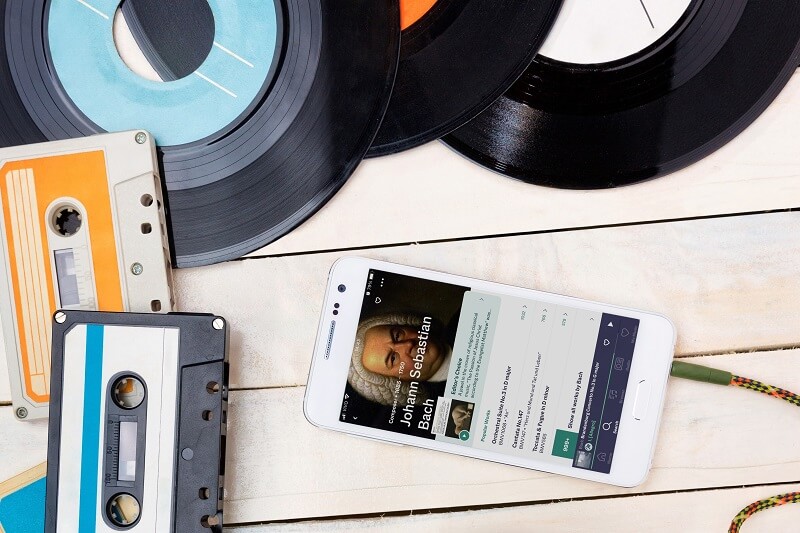
The card you are seeing now is a German Liebig card about Bach, part of a series on classical music composers. It is considered a rare card and is absolutely beautiful, with golden details throughout. The digital scan doesn’t do it justice in person.
Although it’s not a nature or travel card, I think it’s great to start this theme by showing you this one because it perfectly illustrates the first concept we intend to explore in the project: Distinction.
In our online collection, we have an initial field designed to draw the visitor’s attention to that catalogue records. A kind of “bait” to whet the appetite for more dense, academic, reflective, and profound content that comes later. And in this “teaser,” I wrote about this card:
Do you remember the movie Mona Lisa Smile, set in the 1950s? In it, Julia Roberts plays an art professor at a traditionalist university, who prepares brilliant students to be cultured and sophisticated housewives. Well, this Bach print follows exactly the same vibe! The advertisement could very well say: “Cook a fabulous soup for your family while ‘listening’ to Bach’s St. Matthew Passion in your imagination. After all, intelligent women know that Liebig’s meat extract is as easy to cook with as classical music is enjoyable to listen to. With Liebig, you compose a masterpiece for dinner!” Enjoy the curiosities of this collectable card distributed by the Liebig company, which mixes the sacred and the profane, the erudite and the mundane in a cunning marketing strategy – all to ‘boost’ the ego of the female cooks of the early 20th century!
A thinker who can help us understand the implicit codes in trading cards like these is Pierre Bourdieu. Bourdieu’s concept of Habitus helps us understand the formation of “taste.”
For Bourdieu, people’s Habitus is composed of an accumulation of various capitals acquired from the context—economic, cultural, social, linguistic, political, etc.
And it is through understanding the social matrix of the dominant classes and acquiring their resources that people can play the cultural game to try to ascend to the upper social classes. In this sense, trading cards are another piece in this formative puzzle. They are structured within the rules of the elite’s game. And they are also structuring to consolidate the continuity of their values. It’s a self-reinforcing cycle.
In the case of travel trading cards, we need to understand that Liebig and Eucalol cards were published when travelling was truly a luxury. It still is, in a way, but it is definitely immensely more accessible than in past centuries. Therefore, seeing the places represented on those trading cards in person had significant symbolic value.
The multi-trillion-dollar mass tourism market didn’t exist yet. And trading cards certainly contributed their share to encouraging it.
So, fulfilling the desire to visit the places depicted on the trading cards was an aspiration reserved for the elite. But this aspiration was also shared by a middle class that consumed these trading cards and found in soaps or canned meats a “food for the body and the spirit,” so to speak (MORCILLO, 2018).
A side note I’d like to make to conclude the topic of Distinction is that the Brazilian Eucalol trading cards also had a series of cards about classical music composers. All the composers depicted in the illustrations were European, except for Carlos Gomes.
And something I noticed, since we will need to provide cultural and historical information about the cards in the online collection, is that I knew practically nothing about Carlos Gomes.
Why do I know so much about Bach, who is one of my favourite composers, by the way, but almost nothing about Carlos Gomes, who is one of the most famous and internationally recognised Brazilian composers?
Then I came across an even more embarrassing reality… I really like classical music, a “taste” I inherited from my Protestant and family background, which involuntarily ratifies Bourdieu’s concept of Habitus. And, at least on a conscious level, I believe I like classical music for noble and spiritual reasons, not for the “wrong reasons” (like status), as Gombrich puts it in his introduction to his book, The History of Art.
But the fact is that I practically didn’t listen to anything from Brazil. This project made me want to listen to more Brazilian classical music and attend more concerts featuring the works of composers from my country.
It’s not about replacing European classical music with Brazilian music, but about including Brazilian music alongside my other options. And that’s what I did, and I’m loving it. I even included a playlist with some of my favourite compositions for you in the post notes. There’s so much incredible stuff there!
In other words, decolonising our perspective isn’t about changing our point of view; it’s about broadening it and using a lens that allows us to see more inclusively—especially the cultural riches we have around us, which, out of ignorance, we so often disregard.
You know what’s worse than a European with a reified and Eurocentric view of the world? A Brazilian professor who discovers through a trading card that she needs to decolonise her hearing!
Which leads us to the next D…
Explorers Travels: Decolonisation
The next “D” I want to address with you is Decolonisation. Although exploratory journeys cannot be properly classified as “tourism,” they were the embryo of this activity that would come later: Exploratory Tourism.
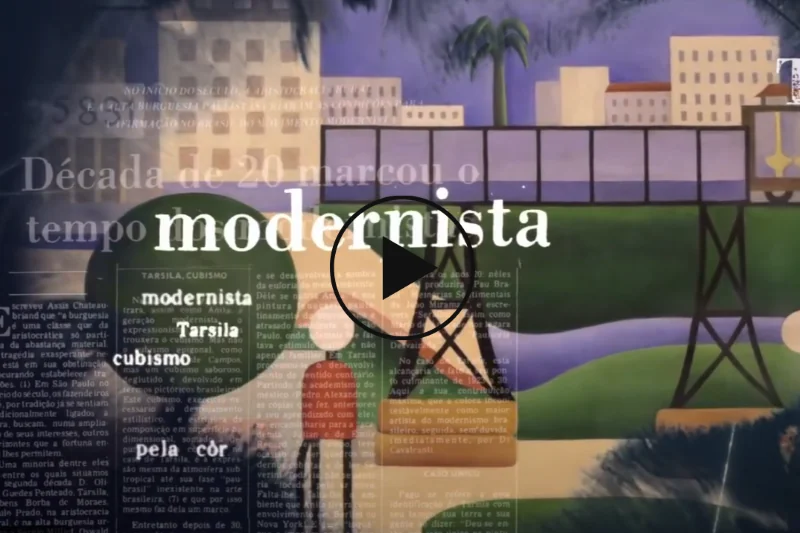
The Eucalol trading cards depict the voyages of the first European explorers of the 15th and 16th centuries in Brazil and the Americas. They also reproduce engravings by travellers – curious individuals or scientists – who were here mainly in the 19th century.
This Eucalol print, entitled “Discovery of Brazil,” has the following text on the back:
“Landing of Pedro Álvares Cabral in Porto Seguro, on April 22, 1500. The image represents the astonished savages in front of these demigods, who emerged from the confines of overseas.”
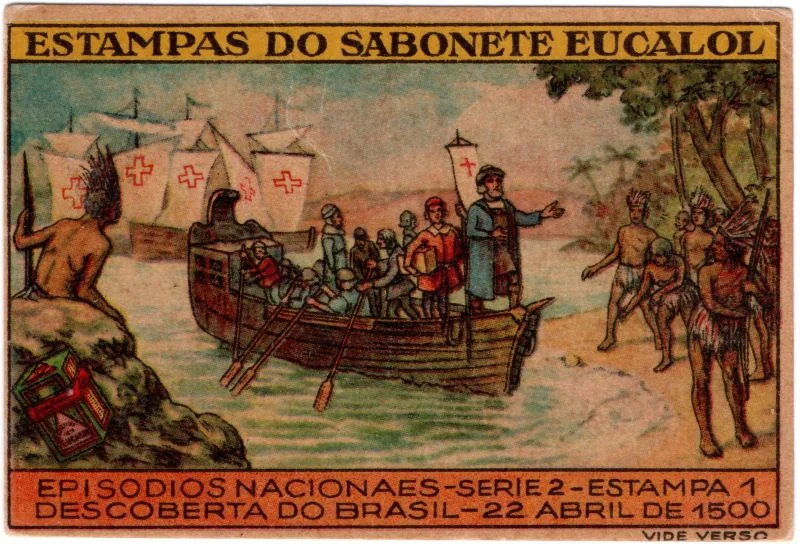
I don’t need to explain to you what is wrong with this illustration and this text, because it’s all very evident at this point. But perhaps something new here, since you are probably not familiar with South American history, is that this and other Eucalol prints contain several historical inaccuracies. Therefore, identifying them in this project is a significant contribution to the fields of education, history, anthropology, sociology, and related disciplines.
According to more recent historical research, the first European expedition to explore Brazil was not that of the Portuguese Pedro Álvares Cabral in April 1500, but rather that of the Spaniard Vicente Pinzón, who arrived on the Amazon River in January 1500.
So, as is easy to see, this trading card is outdated in numerous ways. But we have historical evidence from previous research on Eucalol trading cards that they were used as teaching material in 20th-century classrooms!
Paulo Freire is a Brazilian educator and philosopher who was ahead of his time in this regard and thoroughly questioned dominant social and educational structures.
Pedagogy of the Oppressed, Paulo Freire’s most recognised contribution, is the only Brazilian book among the hundred most requested by English-language universities. According to the research that gathered this data, more than one million study programs in universities in the United Kingdom, the USA, Australia, and New Zealand were analysed. The researchers then filtered the most requested books in the course syllabi. If we consider only books on Education, Pedagogy of the Oppressed ranks second as the most requested work in universities in these countries, behind only Teaching for Quality Learning in University: What the Student Does, by John Biggs.
Paulo Freire considered education a force for liberation, empowerment, improved living conditions, and the development of critical thinking. Therefore, the teaching methods proposed by Paulo Freire are dialectical, interactive, and questioning of the status quo.
Paulo Freire passed away in 1997, the year I entered university as a student. If he were alive today, I would love to talk to him about the application of his liberating pedagogy in museums. And I would also love to hear what he thinks about the fact that trading cards like this one were used by teachers in schools.
Unfortunately, Paulo Freire is no longer with us. But we had an incredible conversation about all of this in my imagination. Since the conversation was very long, let’s move on to the next topic… Ethnocentric Tourism, or the third D: Drugs.
Ethnocentric Tourism: Drugs
Gabriel García Márquez, a Colombian Nobel Prize-winning writer, said that Christopher Columbus’s diary of his “discovery” of America was “the first book of magical realism.” And I think that’s a very fitting description for this incredible diary.
On January 9, 1493, Columbus wrote that he sighted mermaids. And he didn’t even find them as beautiful as they are said to be; they seemed to have the faces of men.
There are many possible explanations for why he thought he saw mermaids.
He could have had psychosis or some personality disorder, such as narcissism or psychopathy. Narcissists feel superior and expect to have exceptional experiences. In this sense, his mental health condition could have led him to believe that he saw mermaids. Or even deliberately lie that he saw them, to make his book more interesting.
Psychological induction, because it was a widespread legend among various peoples. Brazil itself has the legend of Iara. Iara is a beautiful mermaid who seduces men. The Iara legend originated from a blend of stories from Portuguese colonisers and indigenous legends.
And the ancient navigators were aware of these legends worldwide and may have been susceptible to suggestion. We know that Columbus had a deep knowledge of and interest in maps and travel diaries.
Stress, physical fatigue, vitamin and other nutrient deficiencies were serious problems on these voyages. These men on these ships were under constant deprivation and pressure, which can cause sensory alterations and misinterpretations of what they see.
Lack of knowledge of animal species that may resemble a mermaid from a distance, such as the manatee, which existed in the region where he was at that time. If that is indeed the case, it explains his impression that the mermaids were not feminine.
It could even be a combination of several of the reasons I listed. But another reason that applies not only to Columbus’s diary, but to several strange passages in other diaries of ancient travellers, is the use of psychoactive substances, which is a fancy name for hallucinogenic drugs. That is, a substance that alters our state of consciousness and that is not necessary for our survival.
Columbus’s diary, according to the notes in the edition I have, was even the first to describe tobacco, for example. Daily tobacco use is associated with increased risk of psychosis and an earlier age at onset of psychotic illness.
These sea voyagers certainly ingested alcohol during these expeditions; this is very well documented. And excessive alcohol consumption, as we all probably know, can generate cognitive distortions.
But to what extent did they also consume other types of drugs, such as opium and tropical drugs? And that’s where we get into the issue of ethnographic tourism, more specifically, psychedelic tourism.
Tropical forests have a significant number of plants with hallucinogenic effects, which have been used for thousands of years and are still used today by South American indigenous peoples in religious rituals. Some of these rituals have become syncretised with Christianity in contemporary times, contributing to their greater social acceptance.
Probably the most famous of these drugs in South America is Ayahuasca, which means something like “vine of souls”. It is a tea composed of two Amazonian plants that induces a trance-like, dream-like state. Some people have visionary journeys and other introspective experiences. These sensations can be positive or not.
Indeed, these psychedelic substances were experimented with by many of these explorers. And they still are today. In fact, there is a whole tourism industry around these “mystical experiences” caused by tropical drugs here in Brazil and other Amazonian countries.
As I said at the beginning of this lecture, this is a very personal project, and I think it’s essential to make some clarifications. I have no moral reservations about the recreational use of drugs; after all, I occasionally use alcohol. It’s moderate use, but alcohol is a drug. A dangerous drug, in fact, trivialised by contemporary culture, but let’s not get into that here.
However, apart from alcohol and tobacco, which I tried out of curiosity, but I don’t smoke, I have never tried any other drug in my life besides those two. I have taken opioid medications, with a prescription and medical monitoring, but never recreationally. Indeed, I have never tried and would never try Amazonian drugs. And one of the main reasons is that I think I would immediately become addicted to some of them. Addiction isn’t just a chemical thing, but also a psychological one. And I know myself, I would love these drugs.
For example, a friend of mine from my youth is the daughter of a famous Brazilian musician. So she was very immersed in this artistic environment, in these artistic parties and everything else. And at one of these parties, she ingested hallucinogenic mushrooms. And this friend told me at the time that she was in front of an incredible waterfall, where the water started to sparkle, and she began to see colours she didn’t even know existed.
A side note on the colours. A Turkish-American artist, Refik Anadol, collaborated with the Yawanawa indigenous community in the Brazilian Amazon rainforest to create a collection of digital art in the form of NFTs. And these images reminded me of my friend’s experience. Incidentally, the partnership with this artist injected millions—lots of money, a fortune—into indigenous events related to Ayahuasca.
I remember thinking: “Wow, I wish I could see non-existent colours too!” But then she continued, saying that her father, on the other hand, had a terrible trip. He started hallucinating that monsters were chasing him. And his friends had to physically restrain him so he wouldn’t hurt himself or others.
And that’s the point I want to get to… People don’t fully understand the risks of these drugs. Tourists go into the middle of the forest, to a traditional Brazilian community, or to an indigenous tribe, and ingest these psychoactive substances without realising their possible emotional impacts and health consequences, which are not thoroughly studied. There are proven benefits, but potentially serious harms for some people predisposed to these side effects.
And I think that both tourists and indigenous people deserve to know the scientific findings about these drugs before proceeding with their use. Even for those who use it religiously, like the indigenous peoples, a person can access science to make their personal decisions of faith, just like we do in Western culture. Indigenous people are human like us, intelligent like us, and deserve to be better informed about the research on these drugs. More than that, indigenous people should be part of the teams at universities as researchers, studying Ayahuasca and other traditional substances.
Another important aspect, which has a strong connection with this course, is the issue of the commodification of recreational drug use, the so-called psychedelic tourism or, when it involves rituals, shamanic tourism. An article in Le Monde Diplomatique states:
“Three types of tourists can be distinguished. The ‘mystics’ go to the Amazon to have fun and get their share of Brazilian jaguar or anaconda sightings. Medicinal tourists, in turn, come to these centres to be cured of all kinds of diseases, both physical (cancer, multiple sclerosis, AIDS, etc.) and psychological. This group includes terminally ill patients, for whom the Amazon represents the last chance. But what constitutes the core business of these centres is the cure for stress, a true disease of the West, according to the shamans.”
The indigenous people say that Western Europeans have the wealth but not the wisdom that the native people have. This is a way of asserting that, in reality, it is the South that heals the North, according to the Le Monde article.
This type of tourism often distorts the rituals themselves and the indigenous peoples’ consumption of Amazonian plants. For them, these drugs have a cosmological role. They don’t call them hallucinogenic, but entheogenic: an element to “awaken the divine within oneself”.
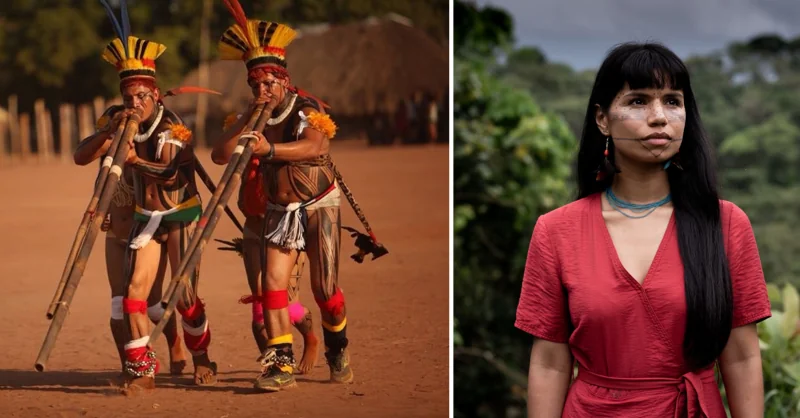
The fact is that many people are profiting from this “exotic” luxury item. And it is possible to drink Ayahuasca tea in art galleries in Chelsea, New York, or on nudist beaches in Ibiza. Or in fancy hotels in the tropical forest.
An article published in The Lancet journal opposes this type of commodification. It is titled Ethical principles of traditional Indigenous medicine to guide western psychedelic research and practice. The paper addresses problems regarding cultural appropriation, exclusionary practices in research, and the patenting of traditional medicines.
Another problem is the environmental issue, the real risk of extinction of these species due to extractive tourism.
Along the same lines as the paper, addressing some of these criticisms, we have the recent documentary video from The Guardian, titled Waska: The forest is my Family.
I won’t go into this problem in depth here, because it’s a lengthy topic, but I think it’s an interesting issue. These drugs have a context in Indigenous culture that tourists do not absorb; on the contrary, it is fetishised by tourism.
And to be honest, I’m even hesitant to address this topic, fearing that instead of raising awareness, I might be encouraging psychedelic tourism. But I hope I’ve done a good job of showing that they are not a good idea, both in ethical terms and in terms of the risk to your health.
To conclude this topic, how does this theme connect with our research?
One thing I want to observe, as a personal curiosity, is whether these trading cards depict tropical hallucinogenic plants and mushrooms. Either explicitly, by mentioning the species, or indirectly, by mentioning Indigenous rituals or illustrations that contain these species among the plants represented.
In this search process, in addition to consulting experts, artificial intelligence can help us identify, in the texts and illustrations of the trading cards, the species capable of altering our normal state of consciousness.
Since some of the trading cards feature engravings by early travellers, it will also be interesting to reread the passages in their diaries about the places depicted on them. And look for mentions of these psychoactive substances and, also, mentions of the last D that I would like to address with you today: the danger.
Adventure Tourism: Danger
What you see here is a French Liebig trading card from Amazon. The “teaser” text I wrote for our online collection says:
Many people around the planet dream of visiting the world’s largest tropical rainforest! This collectable card, part of the Climate and Vegetation series, was a freebie provided by the Liebig meat extract company. It aimed to transport its consumers on an imaginary journey through this “exotic” South American nature. It features a romanticised illustration of the Amazon on the front. On the back, we read an advertisement for the product, aimed at “housewives.” The text then introduces the tropical fauna and flora, including marvellous orchids, butterflies, myriad insects, and birds with plumage as bright as flower petals. The card concludes: “It is in the tropical forest that Nature shows us all its splendour.“
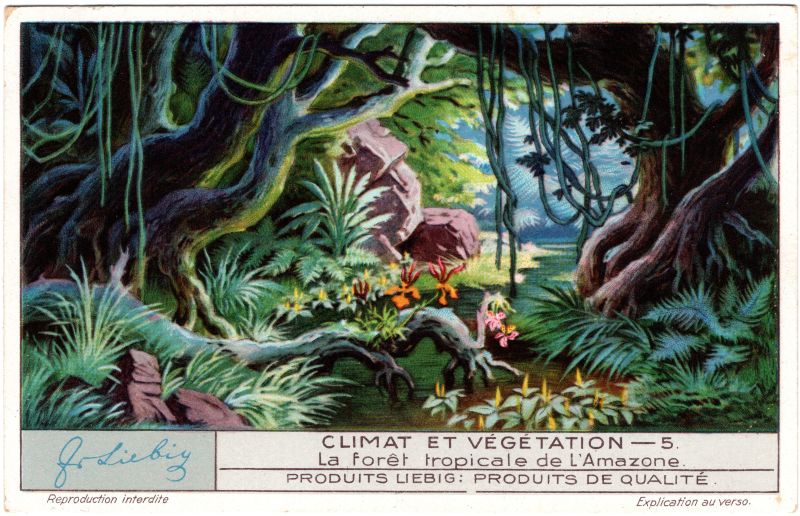
This print was published in the first half of the 20th century. Therefore, it is imbued with the values and cultural contexts of its time. The illustration of the Amazon rainforest, along with the explanatory text on the back of the print, presents a romanticised, Eurocentric view of what tropical nature would be like.
There is no mention of the native peoples, who still inhabit this forest. It is worth remembering that Brazil is home to the largest number of isolated peoples in the world: more than 100 groups, most of them living in the heart of the Amazon rainforest, which covers almost half of Brazilian territory. It’s surreal to think that while we look at this aerial photograph, these folks are living in the middle of the Amazon rainforest and have no idea what’s going on in the world, nor that their image has travelled the planet via the web. It would make for an excellent discussion about image rights and privacy, as well as compliance with GDPR, but let’s move on.
On the back of the print, in the advertisement, by addressing itself exclusively to the “housewife,” the text reinforces gender stereotypes and naturalises sexism in the division of labour. It also places the industrial product (canned meat) as (supposedly) superior to that prepared artisanally, devaluing the gastronomic craft, traditional culinary knowledge, and manual food preparation. In short, there are many analyses prompted by this trading card. Still, the one that most catches my attention is the discrepancy between the reality of a tropical forest and the illustration on the card.
I have never been to the Amazon rainforest. The Amazon is many hours away by plane from where I live, in southeastern Brazil. But I have been to the Atlantic Forest several times, which is also a lush and wild tropical forest. I have participated in about a dozen expeditions in Brazilian forests. In some of them, I worked as a volunteer investigator in speleology or as a coordinator of research and records focusing on cultural heritage and archaeological sites.
And I have read countless books and travel diaries about the Amazon, watched many documentaries, and spoken with travellers and researchers who have been there.
In this sense, I believe I am qualified to say that this trading card presents a “domesticated” view, so to speak, of tropical nature. Everything seems very organised, almost like an English garden that simulates organic growth but is actually meticulously planned —an “invisible organisation.” The flowers and orchids of various types are together, almost forming a display, while the absence of animals, dry leaves, broken branches, and so on is evident.
The tropical forest is not like that. The flowers are generally scattered throughout the forest, which is very dense and, in some places, almost impenetrable. You rarely see “into the distance” in the tropical forest. There is a certain chaos that this peaceful image does not represent well.
Another thing this illustration conveys, and that has nothing to do with the tropical forest, is the silence. The fact is that the experience of observing and reading a trading card is a silent experience. But the tropical forest is extremely noisy. It can be almost deafening at times.
In fact, silence in the rainforest is not particularly positive, and I’ll explain with a personal example.
I was on a research expedition in a tropical forest. We were prospecting an area of pristine forest, looking for new caves —ones that hadn’t been officially recorded.
That’s when one of our more experienced colleagues said it would be better if we left soon, because the place was very “ermo,” an erudite Portuguese word for “desolate place.” I immediately asked: “Ermo? What do you mean?” And he started to explain the meaning of the word ermo. I interrupted and said, anxiously: “No, no! I know what ermo means. I want to know why that’s a problem.” I don’t remember the exact words, of course, but he calmly explained something like this:
“Ana, this place doesn’t smell good. There’s probably a large carcass nearby, the remains of a dead animal. And it may have been prey for a Brazilian jaguar. And it might still be around, because the forest is very silent. I don’t hear birds, I don’t hear monkeys, I don’t hear the animals. When the jaguar arrives, the animals run away.”
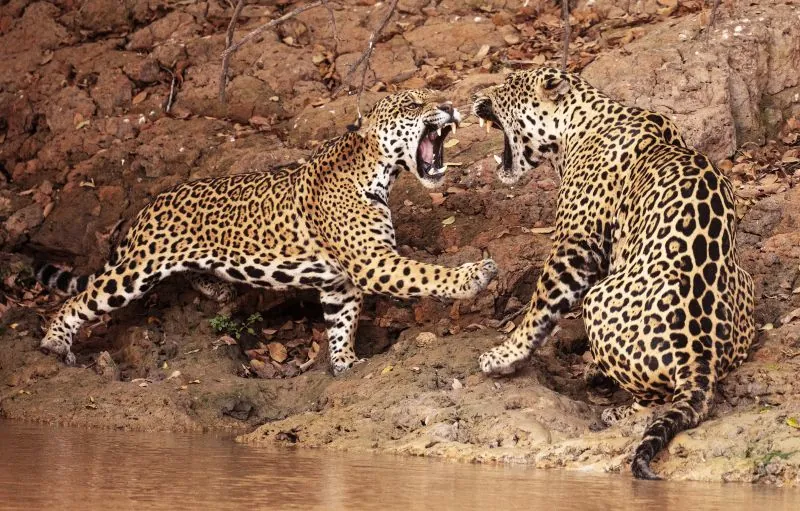
The most shocking thing is that he said this as if he were saying… “Look, the sky is blue, the little boat goes by, the evening falls!” To mention a well-known Bossa Nova song. I immediately panicked: “And what are we doing here? Let’s get out of here now, please!!!” And we quickly left that place.
The fact is that I had never realised, until that moment, that I could be face-to-face with one of my favourite Brazilian animals. But it’s definitely a “date” I intend to have only virtually, in photos and documentaries. At most, in an ethical BioPark separated by a huge moat.
Brazilian jaguar-watching tourism in the wild generates millions of Euros here. It’s a highly ferocious animal, and there have been cases of people killed by jaguars in or near our forests, which brings me to the last point I’d like to address: the danger of adventure tourism.
Despite it being a scientific expedition, let’s be honest: I was very young —an amateur compared to those experienced explorers. And I was there for the adventure. Many people are addicted to adrenaline and strong emotions, like yours truly.
If I could go back in time, I would tell young Ana that those trips and expeditions might not be good for her. I was in real danger of losing my life in the forest, but I won’t cringe my esteemed audience by recounting my other personal experiences now.
I’m gathering the courage to write a blog post about this, since Brazil has been voted the best destination for adventure and nature tourism in the world several times. Although I haven’t travelled in nature as much as other travellers I know, I believe I’ve experienced enough difficult situations to warn young people like you that you shouldn’t mess with nature. Fortunately, nothing serious ever happened to me. I suffered only bruises and minor injuries, but I was fortunate. I could have lost my life on these excursions into nature, as other young people have.
However, in defence of the young Ana, one vital point to make—one that connects with the trading cards and diaries of early travellers—is that, in my mind, I wasn’t a reckless person. On the contrary! I was a wise and cautious person. Why? Because my point of comparison was precisely these travellers and scientific illustrators from the past. Let’s face it… they were brilliant, but perhaps they were kind of insane! Not me, in my head, I was taking calculated risks.
In other words, the romanticisation of danger expressed in these trading cards and in the travellers’ diaries gives people the mistaken impression that they are comparatively prudent. But I was definitely extremely reckless.
Let’s take the British illustrator Marianne North, for example —one of my favourite travellers. I love her paintings and her diary, despite the anachronisms they contain. She travelled the world, including Brazil, in the 19th century!
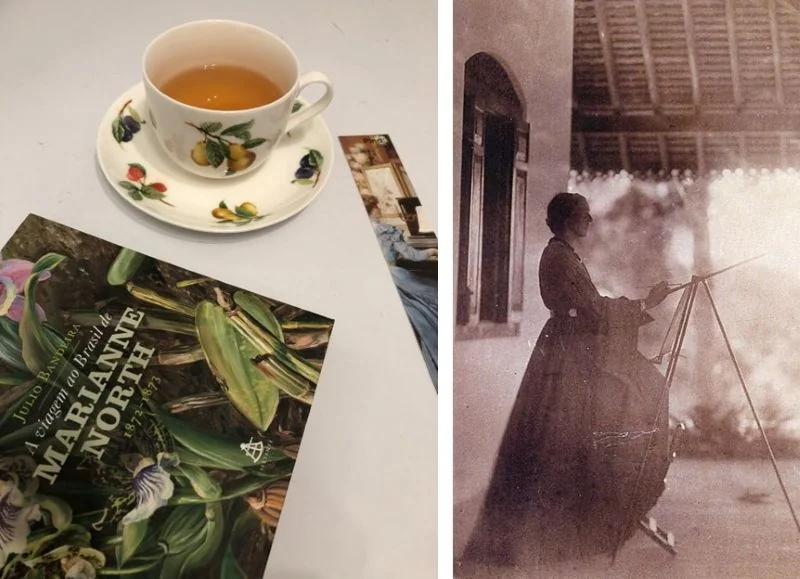
I remember explicitly thinking to myself: “Ana, don’t be a snowflake. Those explorers did these things without GPS, satellite, accurate maps, effective medicines, experienced guides, rescue helicopters, or even a fire department. You’re not doing anything too wild!”
When I started coming into contact with contemporary adventurers through their travel diaries, lectures, documentaries, scientific books, or even expeditions, I also found people who lived much more dangerously than I did.
Many were men in their forties, successful in their professions, who pursued these research and travel activities as hobbies. Some even worked as consultants on the side; that’s how professionalised this hobby was.
They climbed mountains, dived into underground caves, piloted aeroplanes, and sailed the ocean in their boats, breaking world records or helping to break them —for example, in the discovery and mapping of Brazilian caves that entered the rankings of the largest caves on planet Earth.
Two of these speleologists (and I even went on a speleological expedition with them) built their own sailboat! They commissioned the nautical design from a specialised company, erected a shipyard at a yacht club on a lagoon near our city (which has no sea), and built that vessel over a decade. Then, they transported the sailboat by truck to Rio de Janeiro. A team from the Brazilian Navy visited their shipyard, and a lumber mill company sponsored the wood. The result was beautiful, and they even presented lectures about this project.
And this is an important aspect to highlight here. Many of these explorers and travellers give lectures and write books not only about their journeys, but also about management and productivity. The level of logistics required to structure a complex expedition is unbelievable. One extra nut for each daily food ration can sink a craft. Even the order in which the boxes are stacked during the loading and unloading of the numerous transports is carefully planned so that they end up in the correct order inside the final transportation, like jeeps or vessels.
In other words, the feeling I had was that the voyagers from the travel diaries I read in my teens, so distant in the pages of books, had escaped from my bookshelf and were materialising right there in front of me!
Amyr Klink, a Brazilian navigator, son of a Lebanese father and a Swedish mother, wrote in his journal (Endless Sea, 2000, compilation and translation of the blog author):
“A man needs to travel. On his own, not through stories, images, books, or TV. He needs to travel for himself, with his own eyes and feet, to understand what is his. A man needs to travel to places he doesn’t know to break the arrogance that makes us see the world as we imagine it, rather than simply as it is or could be. That makes us professors and doctors of what we haven’t seen, when we should be students, and simply go and see. One day, you have to stop dreaming and somehow depart. The worst shipwreck is not exiting at all.”
He wrote “a man,” but I read “a girl needs to travel.” In my mind, back then, I was attending lectures, reading books, or even travelling or interacting (in person and virtually) with the Marianne Norths, Saint-Hilaires, Columbus and Pinzóns of my time. And this still happens today; I still have that feeling, reading a book or watching a documentary and recognising the faces of people I’ve met in person.
I was recently reading a book about the Danish palaeontologist Peter Lund, and on one of the pages, who do I find? An explorer from my youth. I even helped him organise the launch of his book about Brazilian caves.

And social media — these new and ubiquitous “digital trading cards” — have maximised this type of disproportionate comparison.
And why is it disproportionate? For example, in my case, there’s no way to compare myself to those mates. My fitness, my physical and psychological strength, my knowledge of the forest, the quality of my personal equipment, my level of involvement in the preparation and management of these expeditions, among many other aspects, including the fact that I am a woman. In about half of the expeditions or fieldwork I experienced in the Brazilian forest during my youth, I was the only woman on the team, and I was also usually much younger than the others.
These men, because the vast majority are men, as I said, spent an obscene amount of energy, time, and money on this hobby. The equipment is all imported from Europe. The courses are also expensive, to say nothing of the trips. It’s all very professional, even for those who consider this activity a hobby.
That wasn’t my case; I was a very amateur young girl, and today I see this clearly, with the power of hindsight. Amateurism is sometimes much more dangerous than the activity itself. I probably ran much more risk in the forest than those two adventurers in their handmade sailboat!
Expeditions into the forest are necessary for environmental preservation, scientific research, territory demarcation, cave mapping, the discovery of new species and medicines, and other purposes. Leave this activity to capable, experienced, and qualified people. And even these people who are prepared for this need to assess which challenges to take on wisely, because their lives are at stake.
If you are an amateur, like me, who loves hiking and nature, there are many managed caves and parks with tourist infrastructure where you can have incredible experiences. All of this without endangering your safety or the safety of the speleologists, firefighters, rescue professionals, and doctors who will need to save you in an emergency because you dared to try to experience an adventure beyond your league.
Humility in the face of the forces of nature is an essential lesson that maturity and the rainforest have taught me.
In short, the glamorisation of danger in the jungle and adventure tourism in past centuries, certainly encouraged by trading cards and the diaries of early travellers, fascinates me for highly personal reasons.
In this project, I want to look at these trading cards and the passages associated with them in the diaries for any sign of danger, whether they explicitly mention how dangerous it was to travel or to frequent these forests and remote places.
The human being is the only animal in nature that rationalises its fear. All other animals act very instinctively and immediately to move away from danger, but the human being goes towards it. Experts from various fields research the issue of human relationships with danger, including psychiatrists, psychologists, sociologists, anthropologists, and historians. This research can help us understand adventure tourism and also the science surrounding addiction to danger.
Today we know that the human brain only becomes fully “ready” – to use layman’s terms – around the age of 25. And the part that matures last is precisely the one that helps us plan, wisely predict consequences, and control impulses. Therefore, if you are under 25, as I was when I was exploring pristine nature, understand that your brain is not yet very good at calculating risks.
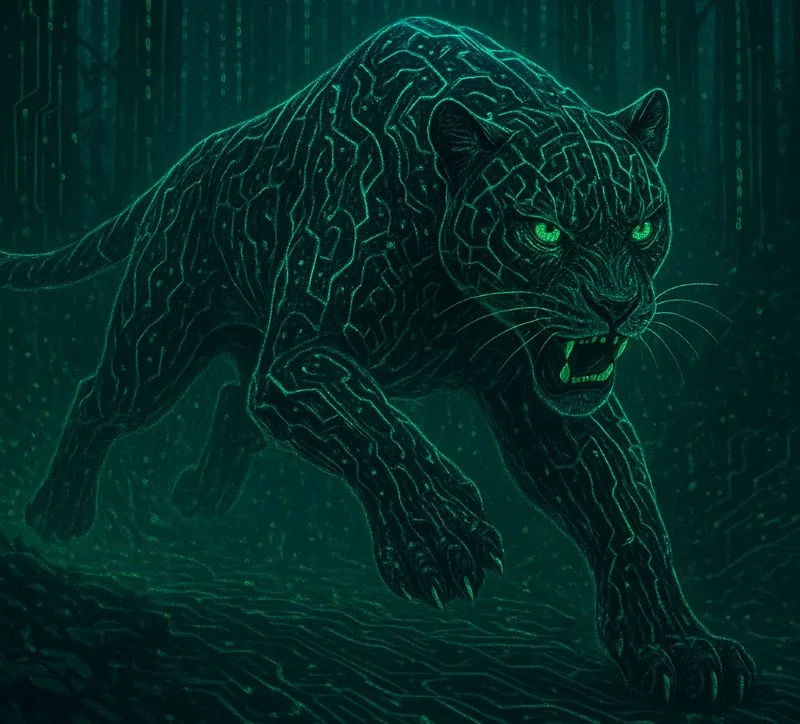
To conclude this topic, I confess that there is something that causes me more panic and fear than the Brazilian jaguar: Artificial Intelligence. So, let’s have one brief reflection to conclude our lecture today.
Artificial Intelligence
In this project, Artificial Intelligence is being used in several stages and in various ways.
Currently, we are conducting exploratory studies with commercial AIs to experiment with their potential contribution in several areas:
• Development of descriptive metadata for the trading cards and their completion manual.
• Identification, selection, and creation of controlled vocabularies.
• Recognition of the original engravings that inspired the illustrations of some series of trading cards.
• Automatic extraction of data from trading cards to fill in the cataloguing records.
• Production of critical analyses of the trading cards.
• Among others.
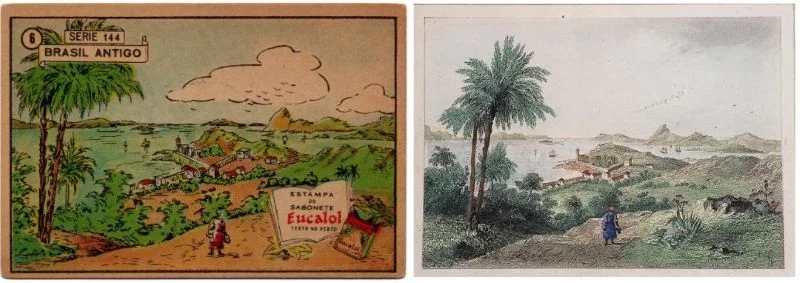
And the results of our preliminary tests are shocking. To give you an idea, we created a standard cataloguing metadata for museums, filled it with the data for a Eucalol card, and asked the AI to fill in the same record model for another card, without giving a single instruction.
The AI did this in 30 seconds, with quality and excellence. I checked everything, and it was correct. It even recognised subtle filling rules.
For example, one metadata was to be filled with the text on the back of the print. The AI identified that, when filling out the example record, I updated the old grammar to the new spelling agreement of the Portuguese language when copying the text on the back of the prints. This update is vital due to the information retrieval capabilities on the Web. The user will hardly type terms with outdated spelling in their search. Like “pharmácia” (drugstore) with PH, it is now written “farmácia” with F.
But the AI did the work of a lazy intern. In the metadata that identifies the illustration of the traveller that inspired the Eucalol card, the AI only filled in that it was an engraving from 1837, information already available on the back of the print. It did not search the Web to find out which engraving it was, its original title, or the artist who drew it. In other words, it didn’t discover which engraving served as inspiration for the trading card artist.
So, I asked the AI to redo the work, searching for the missing information. A few more seconds, and the record was filled in again, this time with the artist’s name and the name of the engraving. In addition, since the engraving’s title included the exact location of the landscape, the AI updated the “location” metadata with more precise information derived from it.
And all of this was done with a commercial AI without specific training. Imagine those museums already using AI more professionally, like the Harvard Art Museums? I had the opportunity to conduct technical visits and interviews at this incredible museum, and I’ve included a very cool project of theirs involving AI in the post notes.
Our current step is to develop a comprehensive cataloguing record with the assistance of AI, following the recommendations of the UK’s Spectrum standard, the world’s most widely recognised standard for collections management, and its Toolkit for managing digital collections. I had the honour of being invited to participate in the feedback workshops for the development of this manual, and some of my suggestions were incorporated into the final document. We are therefore evaluating how AI assists us in creating and completing a complex cataloguing record.
Moving towards the end… Between fascination and fear of this “digital jaguar,” I continue to explore a new universe enabled by a revolutionary technology that will turn the world as we know it upside down.
The use of AI in contemporary times poses numerous challenges; I detail the main ones in a blog post. Beware of the hidden agenda of those who do not correctly recognise the power and impact of AI!
But that’s a topic for our next adventures. Our vessel has reached the shore for today. I hope you enjoyed the voyage. Thank you very much!
Notes
Lecture
Module: Travelling through Nature: Tourism, Culture, and Sustainability – Prof. Elizabeth Chant
Guest Session: Travelling through Nature on Cultural Prints: Eucalol and Liebig Trade Cards – Prof. Ana Cecilia Rocha Veiga
Date: 03/11/2025 – Online Seminar
Lecture Slides: Click here to download the PDF
The University of Warwick Institutional Video
UFMG – Federal University of Minas Gerais Institutional Video
References
Distinction: A Social Critique of the Judgement of Taste. Book by Pierre Bourdieu, 1979.
Pedagogy of the Oppressed. Book by Paulo Freire, 1968.
The History of Art. Book by Ernst Gombrich, 1950.
Estampas Eucalol (Eucalol Prints). Catalogue raisonné by Samuel Gorberg, 2000.
As estampas Eucalol e a memória publicitária brasileira (Eucalol prints and Brazilian advertising history). Book by Wagner Antônio Rizzo, 2014.
Antiquity and Modern Nations in the Liebig Trading Cards. Chapter by Marta García Morcillo, 2018.
A Guide to the Marianne North Gallery. E-Book by Kew Gardens.
Waska: The forest is my family. Documentary by The Guardian: 2025.
Admixture’s impact on Brazilian population evolution and health. Scientific Paper at Science, 2025.
Ayahuasca Tour. Article by Jean-Loup Amselle on Le Monde Diplomatique, 2014.
Psychoactive substances and mermaid sightings at sea. Blog post by Martine Mussies: 2025.
Video: Liebig’s Extract of Meat Company (LEMCO) Extract Of Meat Co – Fray Bentos, Uruguay
Mahku Brazilian Indigenous Exhibition
Winds of Yawanawa – Refik Anadol NFTs Art.
Endless Sea: Alone Around Antarctica – As Far South as a Boat Can. Book by Amyr Klink, 2000.
Artificial Intelligence
The Impact of Artificial Intelligence on Museums and the Cultural Sector. Blog post by Ana Cecilia.
Brazilian Caves and Nature
Amazon Rainforest. Post by Ana Cecilia.
Teaser Video in English: Brazilian Caves and Nature presented by Brazilian Speleological Society
Note: This last video features breathtaking images of the caves in the Peruaçu Valley, Brazil. Watch it without subtitles first to appreciate the nature. Then activate YouTube’s automatic translation to your language.
The documentary featured Alexandre Lobo. Alê is a civil engineer and speleologist from the Bambui Group of Speleological Research, as well as a specialist in mapping caves and virtual reality. He is probably the most awarded cave photographer in Brazil.
In 2000, I participated in an expedition to the Peruaçu Valley with the Bambui Group. I tell a little about this experience in this post here. I fulfilled a childhood dream of visiting Peruaçu.
At the time, the area was a pristine rainforest, with no infrastructure. It was necessary to obtain government authorisation to conduct research there, as the area contains numerous archaeological sites and impressive caves.
Today, the park is managed and can be visited by tourists accompanied by authorised guides. It’s one of the most incredible places I’ve ever been in my life! And my dream now is to go back there with my husband and our children.
Music
Eucalol — Helio Contreiras: Brazilian Music Translation
Brazilian Classical Music – Apple Music Playlist by Ana Cecilia
Brazil and English Bossa Nova – Apple Music Playlist by Ana Cecilia
Secrets of the Tropical Forest – Apple Music Playlist by Ana Cecilia
Note: This playlist features some songs we used to listen to in the pickup truck during our expeditions through the Brazilian rainforest at the beginning of the millennium.
Acknowledgements: Thanks to Liz Chant and Alberto Nogueira Veiga. Many thanks to my Grandma Zelina (in memoriam).
Images: Iguaçu Waterfall (Pexels), Indigenous Dancing (Bertioga City Hall), Nina Gualinga (Alice Aedi, British Vogue), The race is human (Pexels and Ana Cecilia), Royal Portuguese Cabinet of Reading – Library (Wikipedia), Brazilian Jaguar (Wikipedia), Marianne North (Julia Margaret Cameron), AI Brazilian Jaguar (ChatGPT), White Swan Vessel (Ascom Maceio City). Eucalol and Liebig Trade Cards. And photos by Ana Cecilia Rocha Veiga.
Please help me improve my English by sending me your suggestions through this contact form. Thanks!