Fake WhatsApp Account Using My Name
The other day, my dad received a WhatsApp message from “me” saying that I had a new number just for family, and that my other number would be exclusively for work. The WhatsApp account had my name, my photo, and, coincidentally or not, used an argument I had already published on my blog.
In fact, I’ve had two cell phones in the past, and I talk about this in lectures, classes, and blog posts. However, some things seemed strange…
The name included my middle surname, which I haven’t used for almost two decades when I’m not obliged to write my full name. I called my father “dad” and not one of the humorous nicknames we usually use daily. I haven’t had WhatsApp or Telegram since 2019. And the post about this is one of the most read on the blog.
Finally, what made it very obvious that it was a scam: the scammer asked for money. A lot of money. The scammer claimed that “I” needed to make a payment but had encountered a problem with the bank app, and that “I” would return the money the next day because I was going to the bank to resolve the issue with the manager.
My dad didn’t fall for the scam, didn’t give the money to the scammer, and did the right thing: he called me to inform me of what was happening. Since I didn’t answer, he called my husband. As soon as I could, I returned the call, and he sent me screenshots of the attempted scam.
This story had a happy ending. But every day, millions of people around the world are being robbed online or are victims of online emotional cons. And it’s only going to get worse.
Online Scams are Becoming Increasingly Elaborate and Sophisticated
Nowadays, it’s possible to obtain an absurd amount of information published on the web about people, companies, and institutions. And this information helps create increasingly effective scams.
A museum institution I know fell victim to a scam and transferred money to the scammers. The criminals knew exactly how to simulate a transfer situation that this institution actually makes frequently, which is why it fell for the scam. It was very well done.
For all these reasons, I decided to write this post to warn you about a fake WhatsApp account using my name. And also, to give tips on how not to fall for this type of scam, whether it involves me or not.
How Can You Tell if You’re Talking to Me?
In my case, the situation is complicated because, as a professor and blogger, there’s a lot of information about me available. This increases the risk for people who interact with me, as it becomes easier for scammers to impersonate me.
They don’t even need to read my blog. They can have an AI read it for them and simulate a conversation with the information I provide here, pretending to be me. And with so much information about me, it’s easy to craft a conversation that seems legitimate.
In other words, this blog is a “map” for criminals, psychopaths, narcissists, and toxic people to scam others using my name, and even myself.
Therefore, if you’re talking to me through any online channel, double-check, as I explain below.
Email: It’s Only Me If the Address Contains @anacecilia.digital
All my personal, social, and professional email communication happens using addresses from my website’s domain, www.anacecilia.digital. Therefore, if you’re not communicating with an email address containing @anacecilia.digital, you’re not communicating with me!
I’m very cautious about cybersecurity, but keep in mind that no one is immune to being hacked. If the conversation gets too strange, try contacting me directly by phone or meeting.
I do have generic email addresses (Gmail and Proton Mail), but I only use Gmail for Meet meetings, forum registrations, and similar things. And Proton Mail for purchase and service communications. (I recommend Proton, by the way!)
If you’re not a service provider or a store and you’re communicating with me via a generic email address (Gmail, Yahoo, Proton, etc.), it’s not me! You are talking to a scammer.
I also no longer use my UFMG (@ufmg.br) emails. These emails exist, but the messages are redirected to my @anacecilia.digital emails. The UFMG email platform isn’t as good as Proton’s, so I use redirection to get advanced email management.
WhatsApp: It’s Not me, I Don’t Have WhatsApp or Telegram!
As I’ve already mentioned on the blog, I deleted WhatsApp and Telegram in 2019 and never went back. So, if someone contacts you via these apps, it’s not me, period.
Read the post here: Living Without WhatsApp and Telegram: Increase Your Productivity and Life Quality by Deleting These Apps
Signal: Almost Certainly Not Me!
I use Signal to communicate with my husband, my sister, and my parents. In Brazil, only these people. In fact, I usually block all other Brazilians, even relatives, close work colleagues, and friends (no offence, please!). This is an app for very restricted family communication.
Abroad, I occasionally communicate via Signal or iMessage (on the iPhone) for calls with museum professionals, professors, journalists, etc. I need a free and efficient messaging app for voice or video calls. And Signal is great for that. But I usually schedule the conversation on Signal via email!
Therefore, if someone contacts you directly via Signal messages, without a prior email conversation using an address containing @anacecilia.digital, it’s probably not me. I usually start a conversation with a stranger abroad, and also in Brazil, via email, not through messaging apps.
Social Media and Messaging Apps: Almost Certainly Not Me!
I practically don’t use social networks and their messaging apps anymore.
I have a LinkedIn profile, but I rarely access it. I will delete my profile there soon and create a generic one, without my full name, to access this social media when necessary.
I have a Facebook profile, with no friends added, to participate in some professional groups. But I don’t post anything on my personal profile outside of groups. And I ask for people’s emails via messages, to talk by email, not through Facebook.
I have a YouTube channel simply because it’s the second-largest search engine in the world. But there’s nothing there, just a video directing to my websites.
On Instagram, Twitter (currently X) and other social networks, I have a profile with a generic name, without posts, to access them when I need to.
I only send messages via social media, usually Instagram, for services (stores, restaurants, hotels, etc.).
Therefore, if any profile with my name/photo asks you for friendship or sends messages, it’s almost certainly not me. I no longer use social media, with the exceptions mentioned above. Double-check with me via email.
Videos or Audios: Almost Certainly Not Me, Beware of AI!
I don’t like recording videos, but I’ve gotten used to it because it’s imperative for professional reasons. My Portuguese blog has several videos with my voice.
On YouTube, academic platforms, or cloud storage for museums, there are videos of me with images available, even in English. They are hard to find because my name rarely appears in the video description. The name of the university, museum, newspaper, or academic event appears.
But smarter scammers can locate these videos and simulate my voice or image. Therefore, to be sure it’s me, check with me via email at an address containing @anacecilia.digital
Given that it’s relatively easy to fake a video conference with AI, ask difficult questions that only I would know the answer to immediately.
iPhone SMS and iMessages: It Might Be Me, But Double-check!
I always communicate with people via SMS or iMessage on my iPhone, but make sure you’re actually talking to my number. And be suspicious of unconventional requests; someone could steal my phone or hack me!
If the communication is strange, try talking to me in person or, at least, via video conference before responding.
Invitations for Dates, Flirting, Sexting, or Nudes: 100% Certain It’s Not Me!
We Brazilians greet each other with hugs and kisses. Especially me, I’m very caring.
Photos of me hugging people in respectable places, such as museums, congresses, art openings, universities, and restaurants, are probably real.
Anything other than a hug isn’t me; AI does it. Messages flirting with you are definitely not me; I’m in a committed relationship.
Always be Suspicious of “Urgent” Situations
Even though some scammers are extremely patient and talk to you for days, months, or even years before pulling off the scam, they are usually in a hurry.
The more time that passes, the greater the chance you have to check whether it’s really the person. Or the greater the chances they’ll make a mistake, and you’ll suspect you’re not talking to who you think you are.
So, always be suspicious of anyone who is in a hurry to get money or favours from you. If the person is pressuring you to make a quick decision, the chances of it being a scam are high!
Always be Suspicious of Requests for Money, Favours, or Friendships That Seem Excessive
Despite researching cybersecurity and being obsessed with it daily, nothing prevents a clever criminal from hacking my accounts.
So, be suspicious of overly exaggerated requests of any kind via the web, especially if “I” (the scammer) don’t want to schedule an in-person meeting with you or make a phone call/video conference.
I never ask for money for myself. Therefore, if the money is for me personally, it’s never me.
I definitely ask for favours or money for projects, museums, research, philanthropy, academic events, etc. I’m extremely brazen about this and have succeeded several times, so I don’t intend to stop!
But I don’t remember ever asking for large sums of money over the phone or email. I schedule an in-person meeting, bring a prospectus or a project presentation, and talk to the person face-to-face because it’s much more efficient, polite, and elegant.
The chance of you sponsoring, supporting, or donating money is a zillion times greater when the request is made in person than via email or phone. If someone is asking you for large sums of money or extravagant favours in my name online, it’s probably not me. I would do that in person.
From time to time, I support crowdfunding campaigns for museums and donations to Christian or philanthropic institutions.
Since there are many scams of this kind nowadays, whenever I support such a campaign, I will publicise it on my blog or contact you directly. For example, via phone call or in-person meeting.
The same applies to requests for favours, such as accepting one of my students at your museum for research or similar things. In these cases, I will also contact you directly via email at @anacecilia.digital, by phone, or for an in-person meeting.
In Important Decisions and Partnerships, I Always Choose Face-to-face Meetings
“But Ana, I’m abroad or in a different city in Brazil than yours.”
If our professional or social relationship is very important to me, or if there’s a possibility of relevant academic collaboration with you on one of our projects, believe me, I’ll hop on a plane and come to you!
Or I’ll register for an in-person event (course, congress, lecture, etc.) that you’re speaking or attending, to take advantage of the opportunity to meet you in person and establish this partnership.
Have I done this before? Countless times. As I said, meeting someone in person completely changes the game. Therefore, it’s an investment of time and resources that’s worthwhile.
So, be wary of any professional contact of mine who seems “reluctant,” who doesn’t want to talk to you via video conference, doesn’t want to schedule an in-person meeting with you, and so on. Usually, it’s the opposite! I’m just waiting for the right moment to move from the virtual world and ask you for a meeting.
If someone is trying to establish a serious friendship or professional partnership with you online and avoids meeting, that person is not me; it’s a scam. Double-check and contact me by phone or email with an address that contains @anacecilia.digital
I need to talk to you, but I don’t have your contact information. What do I do?
Please write to me via my Contact Form on this website. I usually reply to my blog emails on Saturdays or Mondays. If it’s a professional contact, I might reply sooner if I see your message.
I Might Also Need to Verify Your Identity!
I’m also susceptible to scams. Therefore, if you contact me via this form, please don’t be offended if I ask for further proof that you are indeed who you say you are.
For example, if you are a museum professional, I might contact your institution and try to speak with you there by phone. Or check with the secretary to confirm that the email address you use is correct.
Normally, I’m very cautious in our conversations until I’m certain that you are who you say you are. So, don’t be surprised if I’m super warm with you in person at a conference but seem “cold” in an email. I may be unsure if I’m really talking to you.
I also verify the information of those who write to me for the first time before responding. If you are a legitimate person and haven’t received a response from me, it may be that I’m worried it’s a fake message/person. Please get in touch with me in another way.
I’m from Minas Gerais state here in Brazil. People from Minas Gerais are suspicious. I don’t know if the stereotype applies to all people from Minas Gerais, but it definitely applies to me.
Do Professors, Public Intellectuals, or Bloggers Actually Engage with their Readers? Isn’t It Always a Scam?
In intellectual circles, public figures engage virtually and establish partnerships with their audience.
Beware of narcissists and psychopaths, of course! Sometimes you’re charmed by someone’s public persona, but behind the scenes, they’re extremely toxic. But if you want to send an email, establish a friendship, or partner with someone you admire, don’t be intimidated by their resume. Go slowly, but go for it!
I correspond with writers, artists, renowned professors, and public intellectuals, both in Brazil and abroad. And I know I’m talking to them for real because I meet them in person at their lectures, book launches, art openings, academic conferences, courses, and other events. Sometimes, even for lunch or coffee, when the partnership progresses and moves beyond the virtual world!
I’m not famous (thank God!). This blog has thousands of followers, not millions. But I try to respond to everyone who writes to me politely. It may take a while, but I do respond. However, if your message or email address doesn’t seem legitimate to me, I won’t respond. If you are a good person and haven’t received a response from me, please try contacting me another way.
Take the necessary precautions, but also don’t stop meeting interesting people online. Don’t stop living your life and doing what you need or want to do because of scams.
Stay tuned to the blog to learn more about cibersecurity, or subscribe to my Newsletter to receive exclusive subscriber content and early access links to my main texts!
Notes
Acknowledgements: Thanks to Alberto Nogueira Veiga and all who gave me their precious feedback.
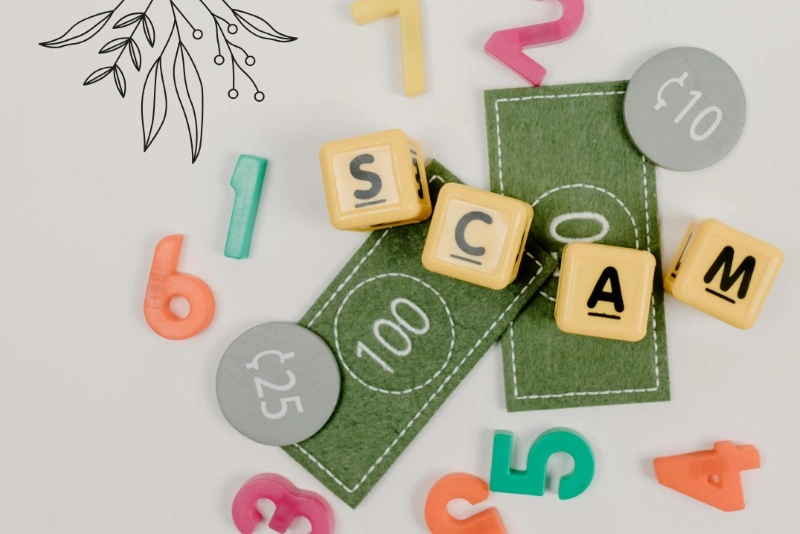
Image: Scams (Pexels).
Please help me improve my English by sending me your suggestions through this contact form. Thanks!
Published on my blog in Portuguese on February 9, 2026: Não caia em golpes virtuais com meu nome aplicados com contas ou e-mails falsos