
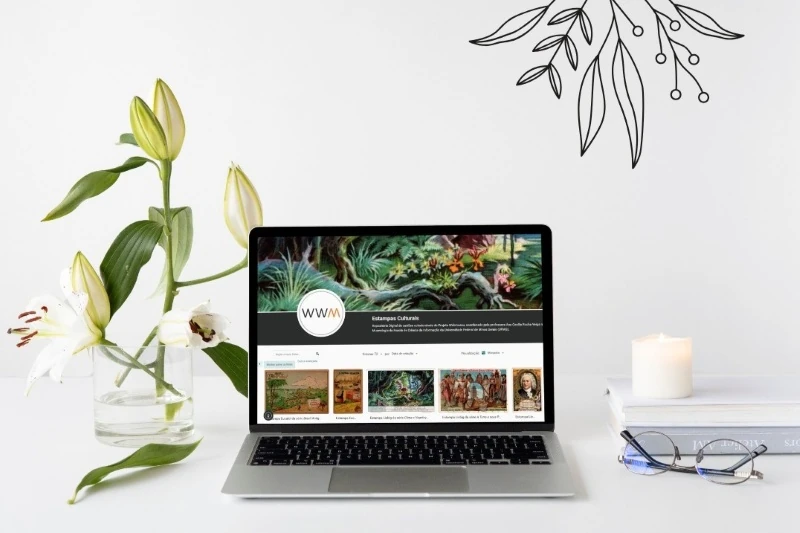
What are Cultural Collecting Cards?
Cultural collecting cards are prints featuring an illustration on the front and historical and/or scientific explanations on the back. Advertisements for the companies that produced them are usually added alongside the explanatory text.
These cards cover a wide range of subjects, including art, travel, museums, historical monuments, architecture, literature, ancient legends, music, nature, scientific discoveries, and curiosities.
Collecting cards reached their peak popularity starting in the late 19th century, following the development of lithography—or multi-colored printing.
According to the Getty’s Art & Architecture Thesaurus (a controlled vocabulary), collecting cards are:
Cards issued singly or in sets since the 19th century, primarily for collecting, bearing a wide variety of images, such as sports figures, movie stars, or flowers. If cards include advertising, use also “advertising cards”; if cards accompany a product, use also “premiums.” For cards bearing tradesmen’s advertisements, and sometimes a variety of images, produced from the 17th through the 19th century, use also “trade cards.”
Liebig Trade Cards in Europe
Justus von Liebig (1803–1873) was a German scientist of great importance to organic chemistry. In the 1840s, he developed a technique for producing meat extract—in paste or cube form—that could be canned without refrigeration. This process promised to concentrate and preserve both the product’s nutrients and its flavour.
The Liebig Extract of Meat Company was founded by the German entrepreneur Georg Christian Giebert, who adopted the inventor’s name with his permission. He established a large factory in Fray Bentos, Uruguay, in 1864. In South America, low production costs made the venture exponentially more profitable. Plans to build a factory in Brazil never materialised.
The company’s European base was located in Antwerp (Belgium), from where the product was distributed across most of Europe. The company’s success was largely due to its affordable prices and quality, as well as a marketing strategy that linked knowledge with nutrition through collecting cards. They served, therefore, as food for both the body and the mind.
This ideal met with the postulates of materialist publicists such as Ludwig Büchner and Jacob Moleschott, who in the 1850s popularised the principle «Man ist was er isst» (One is what one eats). This motto encompassed the idea that food for the stomach was as important as food for the brain, and that for the majority of people, life conditions could be substantially improved through better education and nutrition. (Morcillo, p. 230)
For nearly a century (1871–1975), the Liebig Company issued 1,871 collecting cards redeemable with purchase coupons. They featured advertisements and recipes for dishes prepared with the company’s meat extract. Organised into thematic series, they were produced in various languages.
While many of these cards celebrated European composers and artists, biblical themes, or Greco-Roman antiquity, a growing interest in archaeological subjects, “exotic” geographies, travel, and colonial conquests gradually became evident.
Often, the content of these cards expressed Western values through a strongly Eurocentric lens. Thus, the imperialist mindset became linked to consumer interests, as people “travelled” across the globe—to African and American lands—through the medium of Liebig cards.
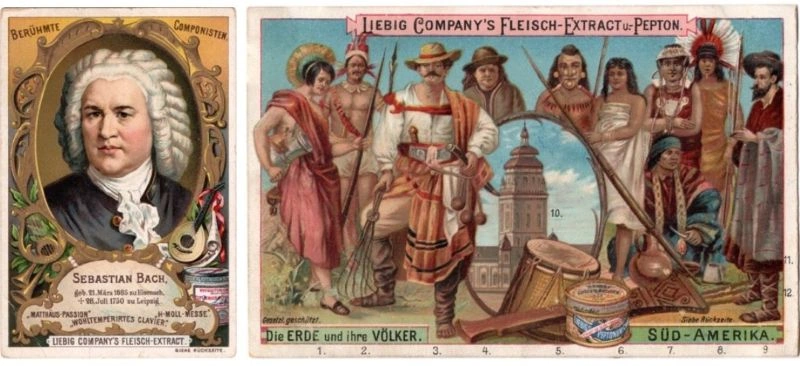
Liebig cards were printed in colour using a technique known as chromolithography. Separate stones served as printing plates for the multiple colours that, when superimposed, created the final image. It was an extremely labour-intensive process—one that was only optimised with the invention of modern printing presses.
Lithography made it possible for graphic art to accompany everyday life with pictures. (Walter Benjamin)
Eucalol Brazilian Prints
As Gorberg aptly noted in his catalogue raisonné of Eucalol cards, there is strong evidence suggesting Liebig cards inspired them. Among the many similarities, the most obvious examples appear to be Series 19 (The Conquest of Mexico) and Series 20 (The Discovery of the Sea Route to India) —which were clearly copied from Liebig cards issued in 1897.
But let us start at the beginning to explore the history of the most famous collecting cards in Brazil—and, likely, in all of South America.
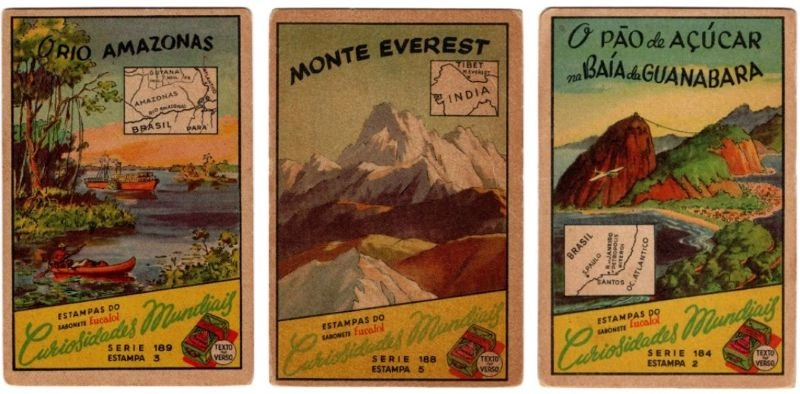
In 1917, German-Jewish immigrant Paulo Stern established a small business in Rio de Janeiro dedicated to manufacturing and trading essences. He used his Brazilian partner’s name to register the enterprise—Correa da Silva & Cia—due to the growing hostility toward Germans at the time. In 1919, his brother Ricardo Stern joined the business. Before settling in Brazil, Ricardo had worked as an international correspondent in Europe.
Thus began what would become a successful manufacturer of toiletry products, trading under the name Perfumaria Myrta. Among its many products, the eucalyptus-based Eucalol line is particularly noteworthy for our research. Soaps bearing the same name were launched in 1926.
Unlike conventional white or pink soaps, Eucalol soaps were green, a feature that initially seemed unusual to consumers. However, as a marketing strategy in 1930, Perfumaria Myrta began including three collecting cards as a bonus in every three-bar box; the cards absorbed the soap’s fragrance. A dedicated album was also available for collecting them.
The cards, issued until 1960, were a huge success:
Facilitated by the product’s chemical properties (avoiding the spoilage issues associated with cigarettes or candy) and the existing transport infrastructure, the distribution of the cards reached virtually every Brazilian state. At the same time—much like the trends seen with stamps and postcards—informal associations emerged to guide and encourage this collecting hobby. In Porto Alegre city, Rio Grande do Sul State, an Eucalol Card Club was formed, boasting a membership of over 3,000 collectors. (…) The widespread reach of Eucalol cards stemmed from their intrinsic qualities and the lack of other media outlets, particularly in cities where the circulation of publications and other informational or recreational printed materials was limited. (Goulart, pp. 160–161)
Despite this success, the company could not withstand competition and closed down in the 1980s; however, its cards are still appreciated to this day. Much like Liebig cards in Europe, Eucalol prints are arguably the most famous collecting cards in Latin America.
Regarding graphic design, there is a strong possibility that the earliest cards were printed in Germany and later by Brazilian printing houses. From a technical standpoint, Eucalol cards were produced using processes distinct from those used for Liebig cards.
In the series Como se faz uma estampa (How a Card Is Made), the reverse side of the Eucalol cards describes the stages of zincography. The original drawing is first photographed. The photographic plate is copied onto a sensitised zinc plate, which is then treated with acids. Once proofs and copies have been made on the zinc plates, the cards are printed—one colour at a time—depending on the size of the press. Finally, they are cut and packaged. The illustrations in this series use six colours.
According to Goulart, the finest cards were produced not by zincography but by lithography, printed in eight colours—as seen in the História do Brasil (History of Brazil) and História Natural (Natural History) series. For both series, the company commissioned the engraver Alexandre Oppido, a “chromist” who created the printing plates for reproducing the original image.
Having been printed over several decades at various facilities—yielding visibly different results—Eucalol cards serve as significant documentary evidence of the production and reproduction systems of the printing industry in the last century, a time of rapid technological advancement.
In terms of content, Eucalol cards covered a wide range of subjects, notably: travel and locations in Brazil and around the world; legends from Brazil and antiquity; global curiosities (cultural heritage); nature (waterfalls, fauna, flora, prehistoric animals); Brazil’s indigenous peoples; literature (Don Quixote, children’s stories); composers; notable Brazilians (Santos Dumont, Oswaldo Cruz); Brazilian history; flags, coats of arms, and uniforms; Scouting; sports; fashion; and dances, among others.
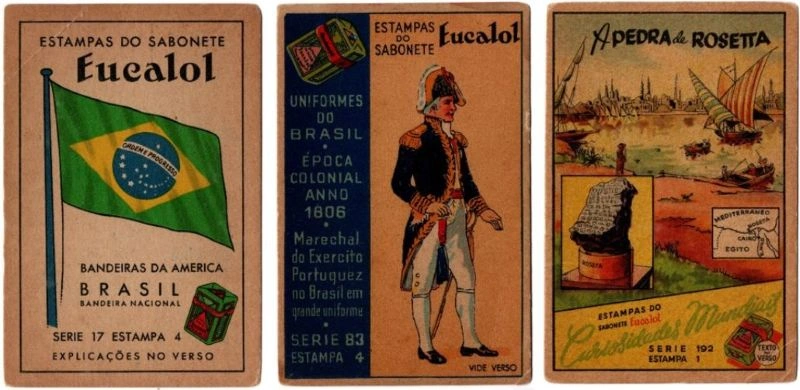
Eucalol soap advertisements promoted collecting as “a new sport!” They further claimed: “Want to be entertained? Want to learn? Collect the instructive and interesting Eucalol soap cards.” And what was once an intellectual pastime has now become our object of work and study.
In his book on Eucalol prints, Professor Wagner Antônio Rizzo draws upon some of the most significant intellectuals to guide us through a rich exploration of these fine cards: Marilena Chauí, Walter Benjamin, Jürgen Habermas, Domenico De Masi, Roger Chartier, Paul Ricœur, Theodor Adorno, Pierre Bourdieu, Umberto Eco, Norberto Elias, Néstor García Canclini, and Italo Calvino, to name a few. Regarding creative leisure—an important concept developed by the Italian sociologist and thinker Domenico De Masi—Rizzo notes:
In articulating the relationship among communication, work, and leisure, João José Curvello examines everyday life through the lens of time allocation, as do other scholars. However, what particularly caught my attention was his dialogue with authors such as Habermas and De Masi. I am especially interested in the reflections on creative leisure found in De Masi’s work, particularly when considering Eucalol cards as cultural objects; their unique characteristics invite questions about a form of playful activity that can also incorporate pedagogical and didactic dimensions. (RIZZO, p. 42)
Having played a significant role in the creative leisure of Brazilians, Eucalol prints earned a place in the history of graphic arts; they are held in museum and library collections, fill the pages of books dedicated entirely to them. Eucalol prints have even inspired music.
Cultural Collecting Cards in Museums Around the World
Various museums, libraries, and archives around the world preserve trading cards in their collections.
In Brazil, Eucalol prints are part of the collections of the National Historical Museum (Rio de Janeiro), the Santa Catarina School Museum (Florianópolis), the Joaquim Felizardo Museum of Porto Alegre, the Brazilian Expeditionary Force Military Museum (Belo Horizonte), and the Tempostal Museum (Pelourinho, Salvador), to name a few examples.
Prominent international institutions also hold trade cards—such as Liebig and others. These include The British Museum (United Kingdom), the Royal Ontario Museum (Canada), the Library of Congress (USA), the National Library of Australia, and North American universities such as Harvard, Princeton, Yale, and Cornell.
The Smithsonian Institution’s National Museum of the American Indian, through the significant initiative known as Smithsonian Digital Volunteers: Transcription Center, has translated its German Liebig cards into English.
Our project at UFMG is gradually establishing contact with these institutions. Some have already kindly collaborated with our research by providing relevant information about the cards in their collections—such as photographs, conservation and storage conditions, inventories, and cataloguing data from collection management software, among other precious details.
Want to Know More About Cultural Collecting Cards?
Take a tour of the Eucalol prints and Liebig trade cards in my Online Collection of Cultural Prints, developed using the Brazilian open-source software Tainacan/WordPress. The collection is in Portuguese, but your browser’s automatic translator can help.
Click here to read information about the Rosetta Stone Eucalol Card. It depicts an important archaeological artefact on display at The British Museum.
You can also read a text about my lecture on this project at the University of Warwick, UK: Travelling through Nature on Cultural Prints: Eucalol and Liebig Trade Cards.
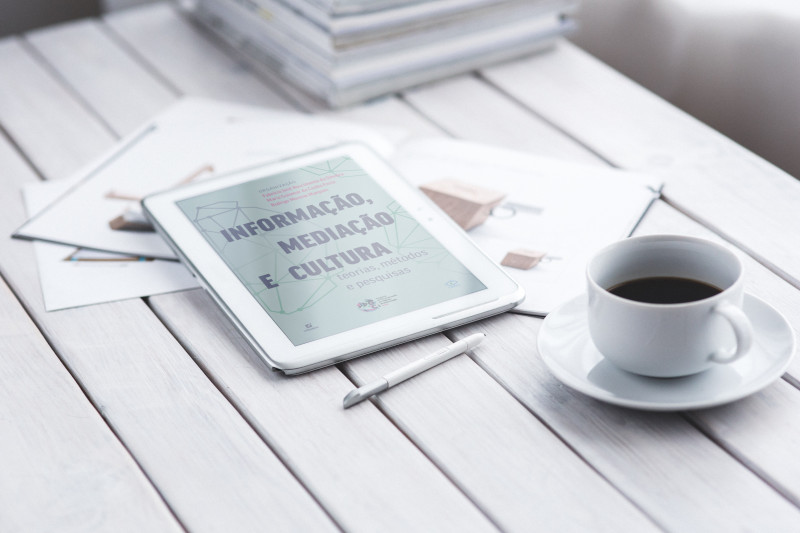
This post is part of my e-book Manual on Cataloguing, Preventive Conservation, and Collection Management: Cultural Prints, the result of our research at UFMG. Download the e-book for free by clicking the link above or the image below.
The e-book is not yet available in English, but I have published other chapters from it on my Portuguese blog—which your browser can quickly translate:
How to preserve Eucalol prints or other collecting cards?
Will Artificial Intelligence replace professionals in museums, libraries, archives, and galleries?

Notes
Estampas Eucalol Raisonné Catalog. Samuel Gorberg, Rio de Janeiro, 2000.
Álbum de Figurinhas: Configurações e Histórias. Paulo Cézar Alves Goulart. Available at: <https://www.teses.usp.br/teses/disponiveis/27/27135/tde-03052024-120619/publico/731310GoulartPauloCezarAlves.pdf> Accessed on: June 17, 2026.
Antiquity and Modern Nations in the Liebig Trading Cards. Marta García Morcillo In: Antigüedad clássica y naciones modernas en el Viejo y el Nuevo Mundo, Madri, 2018.
Fina(s) Estampa(s): As estampas Eucalol e a memória publicitária brasileira. Wagner Rizzo, Brasília, 2014.
SMITHSONIAN INSTITUTION. German Advertising Trade Cards Collection: Transcription Center Project. Available at: <https://sova.si.edu/record/nmai.ac.288> Accessed on: June 17, 2026.
TAINACAN. Available at: <https://tainacan.org/en/> Accessed on: June 17, 2026.
Please help me improve my English by sending me your suggestions through this contact form. Thanks!
Published on my blog in Portuguese on June 23, 2026: Estampas Eucalol e Liebig: Conheça a história destes cartões colecionáveis